In a nutshell
- 🌿 Newspaper mulch slashes evaporation, locks in moisture, cools soil, and feeds microbes as it breaks down.
- 🧱 For strong weed suppression, lay 6–10 overlapping sheets, wet as you go, and cap with 3–6 cm of compost, leafmould, or chips.
- 📰 Use plain newsprint with soy-based inks; avoid glossy/coated papers and keep mulch off stems to prevent rot and slugs.
- ♻️ Low-cost, plastic-free method that cuts watering by 25–50% and reduces weeding time, with seasonal top-ups for durability.
- ⚖️ Paper is carbon-heavy: offset surface nitrogen tie-up with a thin compost layer or gentle organic feed around hungry crops.
Britain’s gardeners are rediscovering a humble hero: newspaper mulch. In a dry spell or under hosepipe bans, this simple layer of paper slashes evaporation, retains soil moisture, and deprives weeds of light. It’s cheap, quick, and surprisingly durable. Instead of wrestling with plastic sheets or spending on boutique bark, you can convert yesterday’s headlines into today’s moisture conservation strategy. Laid correctly, newspaper forms a breathable barrier that keeps roots cool and soil evenly damp. It also feeds the soil ecosystem as it breaks down. Below, a practical guide to how it works, how to lay it, what to use—and what to avoid—so you can grow more with less water and less weeding.
Why Newspaper Mulch Works
The science is disarmingly simple. A multi-layer paper blanket reduces direct sun and wind on bare soil, cutting the energy that drives evaporation. Less heat, less loss. That means water retention where it matters: around your plant roots. At the same time, the opaque sheets starve weed seeds of light, providing robust weed suppression without chemicals. It works on annual weeds and weak perennials; persistent thugs may still test your patience.
Paper is mainly carbon. As it softens, soil microbes and earthworms pull fibres down, gently improving soil structure while consuming nitrogen. That’s why gardeners add a nitrogen source above or below the paper for heavy feeders. Crucially, modern UK newsprint typically uses soy or vegetable-based inks, which are considered garden-safe. The sheets breathe enough to let rain and irrigation percolate, so you don’t end up with sour, waterlogged beds. In essence, newspaper offers a rare combo: immediate function—cooler, darker soil—plus a slow, benign integration into the soil food web.
There’s a bonus. Compared with woven plastic fabrics, paper avoids microplastic fragments and can be replenished seasonally without landfill guilt. For water-stressed plots or no-dig conversions, it’s a thrifty, low-tech tool that delivers.
Step-by-Step: Laying Newspaper Mulch
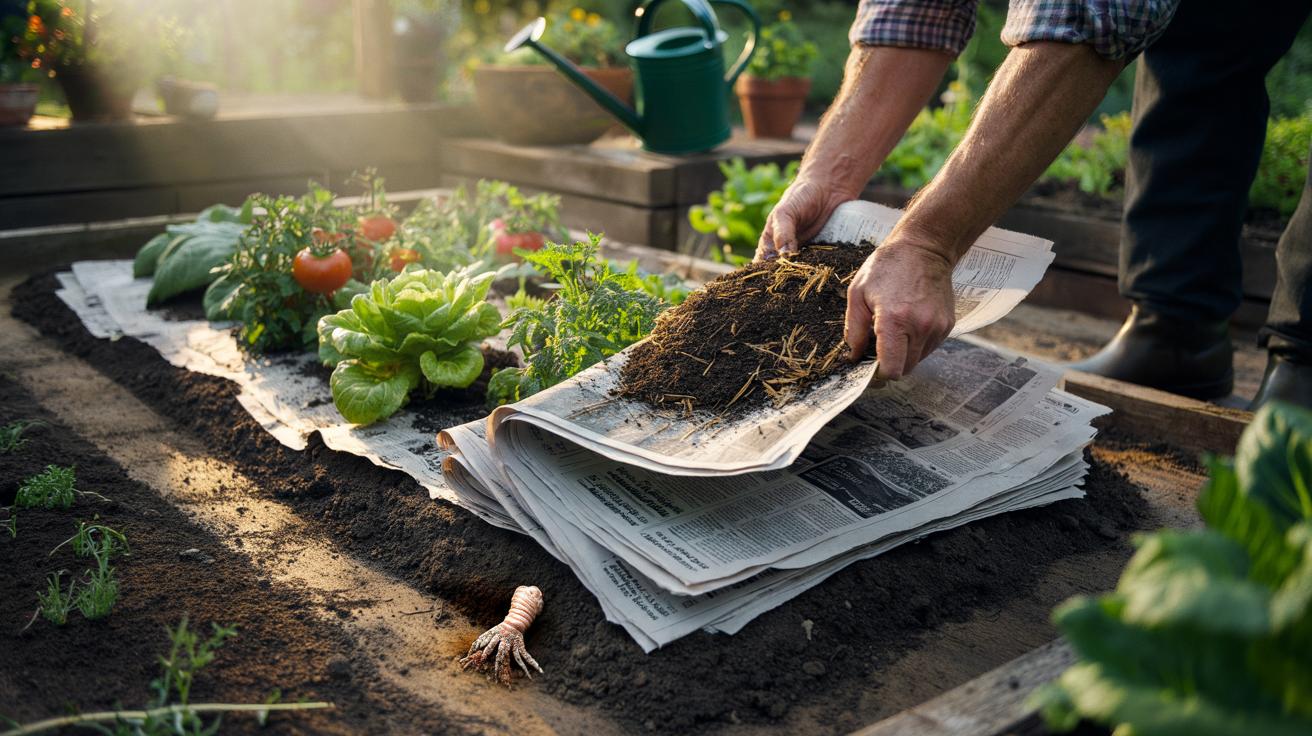
Start with moist soil, weeded to ground level. Water deeply once. Spread 6–10 sheets of newspaper (thicker on problem patches), overlapping edges by 8–12 cm to close light gaps. Wet the sheets as you lay them to anchor in wind and mould them to the soil’s contours. Around stems, leave a slim breathing ring and avoid piling paper directly against soft bark. If you’re smothering turf for a new bed, bump to 10–12 sheets, then cap with 5–7 cm of organic mulch.
Top with compost, leafmould, wood chips, or straw—about 3–6 cm—to hide paper, protect from UV, and add weight. Pin edges on windy sites with stones, wire staples, or lengths of pruned branches. Water again until the stack is thoroughly damp. The aim is a snug, continuous quilt. Expect a few determined weeds to find seams; slice them off at the base rather than yanking up the layers. Consistent overlap and a proper top mulch make the method practically maintenance-free.
| Material | Amount per m² | Purpose |
|---|---|---|
| Newspaper sheets | 50–80 pages (6–10 layers) | Light block, moisture barrier |
| Water | 4–6 litres | Anchors paper, primes soil |
| Top mulch | 3–6 cm depth | UV shield, weight, nutrients |
What to Use and What to Avoid
Not all paper is equal. Choose plain black-and-white newsprint with soy-based inks; most UK newspapers qualify. Remove plastic wrap, tape, and staples from supplements. Avoid glossy magazines, heavily coloured inserts, and coated paper, which shed poorly and can repel water. Lightly crumpled sheets knit better than perfectly flat ones, but don’t shred—strips break down too fast and don’t block light well.
Cardboard is a close cousin for paths or woody borders. Opt for uncoated brown boxes, peel off any glossy labels, and use one to two layers, well overlapped. Beware straw or manure mulches contaminated with persistent herbicides (aminopyralid-type residues); if in doubt, compost and bioassay first. For beds with slugs, avoid thick straw caps; use leafmould or compost instead and keep mulch a finger’s width from tender stems.
Newspaper under stones? Yes—use fewer sheets and expect quicker breakdown. Under wood chips in no-dig veg? Ideal. Around perennials, leave a breathing gap at crowns. For shrubs and trees, keep mulch off trunks to prevent rot. Think of the paper as a temporary scaffolding for a living, low-weed, water-wise surface.
Benefits, Costs, and Environmental Impact
On the ledger side, the numbers please. Garden trials commonly report 25–50% lower watering frequency once a solid newspaper mulch is established, with weeding time slashed dramatically in the first season. Costs are minimal—often zero if you repurpose your own papers—versus £6–£12 per bag for decorative bark. Time to lay? A small bed takes under an hour, with dividends all summer.
Environmentally, paper decomposes into the soil organic matter pool, feeding microbes and earthworms without leaving microplastics. For gardeners trying to cut plastic, this is a practical swap with immediate impact. The carbon is biogenic and already in circulation; by fostering cooler, covered soil, you also reduce oxidation of organic matter. The caveat: because paper is carbon-heavy, nitrogen can be immobilised at the surface as it breaks down. Counter with a thin layer of compost above the paper or a light, slow-release organic feed around hungry crops.
Durability varies. In wet, worm-rich soils, expect partial breakdown in 3–6 months; under dry chips, it can serve a full season or longer. Top up annually. The result is a cleaner, steadier growing space that uses every drop more intelligently.
Done with care, newspaper mulch becomes more than a hack; it’s a resilient, low-cost system for cooler soil, fewer weeds, and steadier growth in British conditions that increasingly veer between drought and deluge. It’s adaptable, plastic-free, and friendly to the creatures that build healthy ground beneath our feet. The trick is simple: overlap well, soak thoroughly, and cap with a decent organic mulch. Ready to turn yesterday’s news into tomorrow’s better harvest—what patch of your garden will you try first, and what will you compare it against to measure the gains?
Did you like it?4.6/5 (29)