In a nutshell
- 🌱 The one upgrade is liquid seaweed extract—a biostimulant rich in natural auxins and cytokinins that drives lateral roots and abundant root hairs.
- 🧪 How to use: dilute 5–10 ml/L for established plants and 2–3 ml/L for seedlings; apply every 10–14 days (houseplants monthly), early or late; always dilute and add extract after water.
- 🇬🇧 UK benefits: stronger drought resilience, less transplant shock, faster take in cool clays and peat-free composts; pet-safe, low odour, and pollinator-friendly.
- ⚠️ Pitfalls and buying: avoid overdosing and quick-fix expectations; choose cold-processed products from Ascophyllum nodosum; don’t mix with alkaline feeds, peroxide, or sterilants; store cool and sealed.
- 🔍 Strategy: pair with balanced feed, mulching, and mycorrhizae; run a side-by-side trial to see whiter tips and denser roots within weeks.
Gardeners love quick wins. Healthier roots are the quickest of all, because every thriving shoot, bloom, and fruit depends on what happens below the soil line. The simplest upgrade? Add liquid seaweed extract to your watering can. This kelp-derived tonic nudges plants to form more root hairs, ride out stress, and take up nutrients with less fuss. It’s not a fertiliser in the conventional sense. It’s a growth signal. Used as a light drench, it works with compost biology rather than against it, boosting resilience during dry spells and speed after transplanting. Small dose, big difference. It’s straightforward, affordable, and surprisingly versatile.
Why Seaweed Extract Supercharges Roots
Seaweed, particularly Ascophyllum nodosum from the North Atlantic, is rich in natural auxins and cytokinins that encourage cell division and lateral root formation. Those hormones, plus betaines that help cells retain water, push plants to build dense, fibrous systems with abundant root hairs. That matters because root hairs are where the real work happens: nutrient and moisture uptake. You also get trace minerals and alginates that improve soil structure around the rhizosphere, creating stable microenvironments for beneficial microbes. Roots feel safer, so they explore more.
Seaweed extract doesn’t “feed” like a high-NPK fertiliser; it primes the plant to root deeper, recover quicker, and use what’s already there more efficiently. Results show up first in transplants and seedlings that normally sulk. Less wilting. Faster “take.” It also dovetails with mycorrhizal fungi, which latch onto more, finer roots. The outcome is visible within weeks: whiter tips, tighter branching, improved firmness in pots that previously collapsed after a missed watering. In brief, it’s a biological nudge rather than a brute-force push.
How To Use It In Your Watering Can
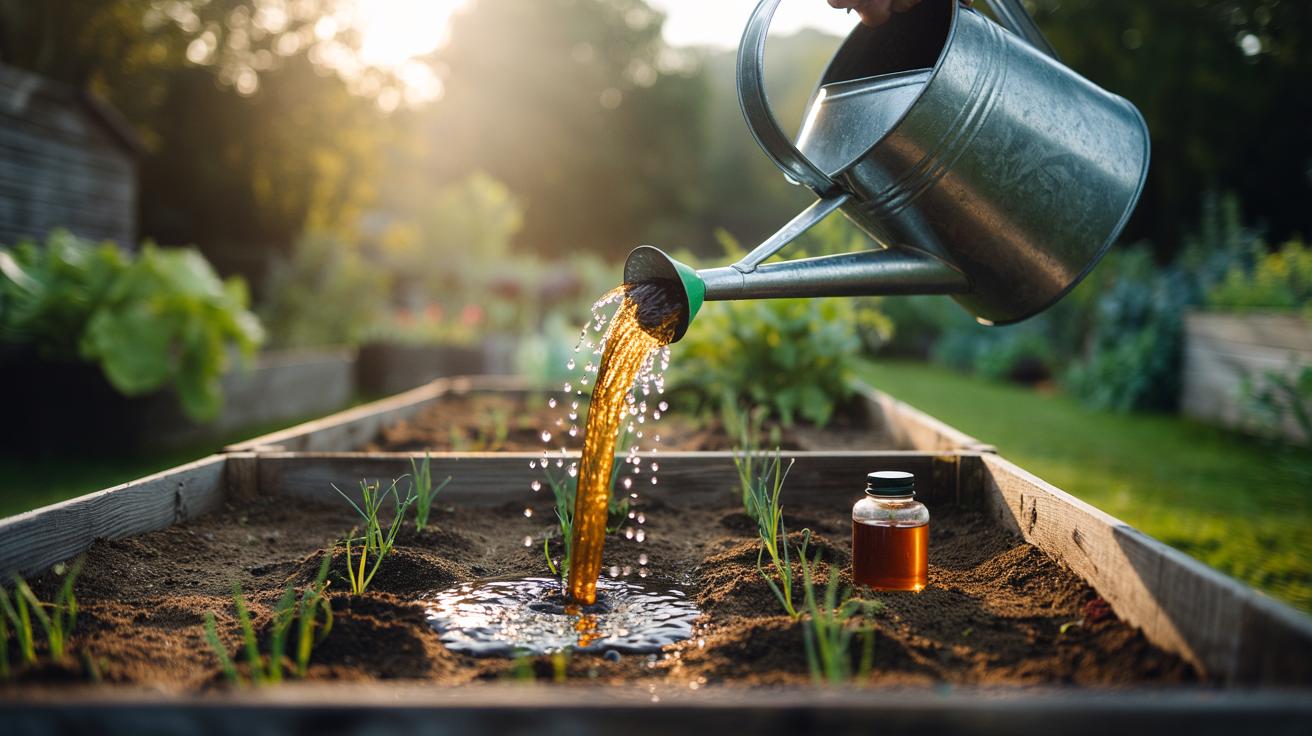
The rule is simple: dilution and consistency. For most products, mix 5–10 ml per litre of water for established plants. For seedlings or sensitive species, 2–3 ml per litre is ample. Apply as a gentle drench to the root zone, ideally early morning or on a cool evening to minimise evaporation and stress. Always dilute before applying to roots, and never exceed the label rate unless the manufacturer explicitly allows it. Stir well, then water slowly so the solution soaks into the top 10–15 cm of soil. You’re aiming for contact time, not runoff. Every 10–14 days is enough for outdoor beds; potted houseplants are happier with monthly doses.
Mixing order matters. Add extract to the can after water, not before, to avoid clumping. If you’re combining with soluble feeds, run a half-strength fertiliser and keep the seaweed within the normal range. Avoid mixing with strongly alkaline solutions that may degrade hormones. Store the bottle cool and out of direct sun; these bioactive compounds are fragile.
| Plant Stage | Rate (ml/L) | Frequency | Notes |
|---|---|---|---|
| Seed sowing & seedlings | 2–3 | Weekly | Mist or light drench; avoid waterlogging |
| Transplanting | 8–10 | Once at planting | Water in generously to reduce transplant shock |
| Veg & herbs (established) | 5–7 | Every 10–14 days | Target the base; keep leaves dry |
| Houseplants | 3–5 | Monthly | Use tepid water; ensure drainage |
| Lawns & borders | 8–10 | Every 3–4 weeks | Apply after mowing or light cultivation |
Benefits You Can Expect In UK Gardens
Our weather swings. Warm April. Soggy May. A dry snap in June. Seaweed extract smooths those jolts by enhancing drought resilience and moderating stress signals. You’ll see sturdier stems on wind-prone coastal plots and quicker establishment in heavy, cool clays common across the Midlands. Vegetable growers report faster recovery after pricking out, while container gardeners notice fewer midday flops and better colour. Flowers hold longer. Fruiting crops set more evenly because the plant isn’t firefighting every minor stress.
Expect denser, whiter roots within a fortnight in mild conditions, and stronger transplant performance when the soil is still cool. It also synergises with peat-free composts, which sometimes struggle with consistency. The extract helps roots bridge patchy textures by boosting root hair growth. Team it with a light, balanced feed during peak growth for best yields; seaweed won’t replace nutrients, but it makes them count. There’s wildlife peace of mind, too: reputable products are safe around pets, pollinator-friendly, and low-odour, making balcony and courtyard use straightforward.
Pitfalls, Myths, and Buying Tips
Two common mistakes: using too much, and expecting fertiliser-like results overnight. Over-concentration can scorch delicate seedlings and may disrupt beneficial microbes. Start low, watch the plant’s response, and adjust rather than chasing miracles with heavy pours. Choose cold-processed or “enzymatically extracted” products; they preserve hormones better than high-heat or highly alkaline methods. Scan the label for Ascophyllum nodosum; it’s the gold standard in trials. NPK values will be low—this is fine. Seaweed extract is a biostimulant, not a primary feed.
On sustainability, look for certifications and UK/EU suppliers who state their harvesting practices. Dark, viscous liquids usually stay potent longer; store sealed, cool, and shake before use. Don’t blend with peroxide or strong sterilants—those undo the biological advantage. Myths persist about “one drench fixes all.” It doesn’t. Pair with good basics: adequate watering, mulching, and a balanced fertiliser regime during peak growth. Used this way, seaweed becomes the quiet constant that keeps roots busy and plants composed under pressure.
Small interventions change outcomes. A capful of liquid seaweed extract in your watering can builds deeper roots, cuts transplant shock, and steadies plants through erratic British weather. It’s low effort, modest cost, and slot-in compatible with the rest of your routine. Think of it as a primer that helps every other input perform better. Try it on a few plants first, compare with untreated neighbours, and watch the difference in root density and recovery after stress. Ready to run your own quick trial this season, and if so, which plant will be your test case?
Did you like it?4.6/5 (21)