In a nutshell
- 🍂 Removing senescing leaves stops resource drain, redirects energy to healthy growth, improves airflow, and reduces pathogen footholds.
- 🧪 Clean pruning can lower stress signals like ethylene and ABA, easing hormone pressure while improving hydraulic efficiency and overall carbon balance.
- 🕰️ When to trim and when to wait: cut once leaves are mostly yellow on older growth; diagnose if new leaves yellow; keep partly green leaves on weak plants; be cautious with succulents.
- 🛠️ Practical protocol: inspect patterns, fix water/light first, use sanitised, sharp tools, make small precise cuts, then feed lightly and boost airflow around the crown.
- 📊 Use the quick decision guide: trim old-yellow leaves, diagnose new-yellow, remove spotted/mushy tissue aggressively, and wait for easy detachment on succulent leaves.
Yellow leaves can look like a failure. They are not. They are signals. When foliage turns from green to gold, a plant is reallocating resources or responding to strain, and the right response from a gardener can make the difference between recovery and decline. Trimming those spent leaves, experts say, is not merely cosmetic; it is strategic triage that protects energy reserves and curbs disease pressure. The aim is to stop the leak and steady the system. Done with clean tools, at the right time, and for the right reasons, pruning yellowing leaves reduces stress hormones, restores airflow, and focuses growth where it matters. Less waste, more vigor.
How Senescing Leaves Drain Resources
As leaves enter senescence, they stop being assets and start becoming liabilities. Chlorophyll breaks down, photosynthesis drops, and the leaf shifts from producing sugars to drawing on the plant’s carbohydrate bank for maintenance. That shift has a hidden cost. The plant pumps nutrients—especially nitrogen and potassium—into dying tissue to salvage what it can, a process that consumes energy and time. Every extra day a yellow leaf remains attached is a day of unnecessary metabolic spending. In crowded canopies, those fading leaves also trap humidity and shade healthy tissue, compounding stress.
There’s another risk: pathogens and pests. Senescent leaves attract opportunists—fungal spores, sap-sucking insects, even bacterial blight—that use weakened tissue as a beachhead. By removing yellow leaves promptly and cleanly, you eliminate that foothold and improve airflow, which disrupts disease cycles. The benefit is twofold: redirected resources flow to new shoots and roots, and the plant’s environment becomes less hospitable to trouble. Quick cuts, minimal wounds, maximum payoff.
When to Trim and When to Wait
Not all yellow is equal. Some species shed leaves seasonally or during acclimation, and a few variegated varieties carry pale patches that mimic chlorosis. Rule one: confirm the cause before you cut. If yellowing is uniform and old leaves go first, think natural aging or a transient nutrient shortfall. If new growth is affected, suspect overwatering, root rot, or a micronutrient issue. In those cases, trimming is supportive, not curative; you must fix the underlying problem or the cycle continues.
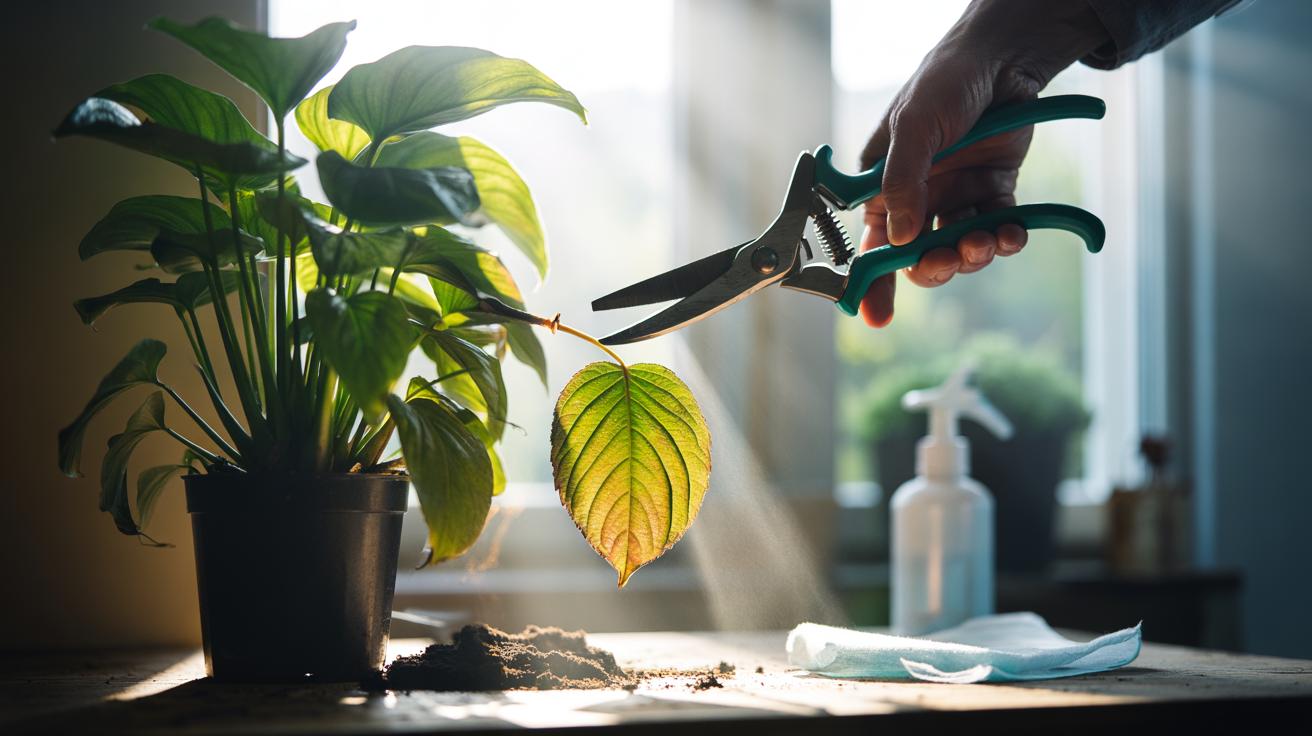
Trim when leaves are mostly yellow or limp, snipping at the base without tearing tissue. Leave partially green leaves if the plant is weak—they still photosynthesize and can help recovery. Use sterilized, sharp shears; one wipe with alcohol between plants prevents cross-contamination. For plants that store energy in leaves (some succulents), wait until the leaf detaches easily with a gentle tug. Timing matters: prune in the morning, when turgor is high and temperatures are cooler, to reduce water loss and shock.
The Science of Stress: Hormones, Hydraulics, and Energy Budgets
Plants juggle competing signals. Yellowing leaves often coincide with spikes in ethylene and abscisic acid (ABA), hormones that accelerate aging and close stomata during strain. These chemical cues conserve water but also slow growth. By removing senescing tissue—the main source of ethylene in a stressed canopy—you can lower those signals locally and help reset the balance toward recovery. Clean cuts reduce chronic stress far more than delayed, ragged removal.
Hydraulics matter too. Decaying leaves transpire poorly yet still siphon water and minerals through the petiole, creating a low-return demand on the xylem stream. Trimming reduces that unproductive pull, freeing flow for buds and roots with better payback. There is a caveat: wounds themselves trigger defense responses. Keep them small, angled, and dry; avoid pruning during extended wet spells that favor infection. Ultimately, the energy budget decides. Eliminate the costs that don’t bring photosynthetic income, and the plant’s carbon balance improves quickly.
Practical Steps and a Quick Decision Table
Start with inspection. Note which leaves are yellow, where they sit on the stem, and whether veins stay green—a classic chlorosis pattern that hints at iron or magnesium issues. Adjust watering and light first if the pattern screams environment. Then prune deliberately: stabilize, sanitize, then snip. Small, frequent trims beat big, infrequent hacks. Think of it as housekeeping that keeps physiology tidy. Finish by feeding lightly with a balanced fertiliser and ensuring airflow around the plant’s crown to discourage disease.
Use this snapshot guide at the potting bench. It’s simple, fast, and reduces second-guessing when every leaf seems to have a backstory.
| Scenario | Action | Rationale |
|---|---|---|
| Old leaves yellow first | Trim once mostly yellow | Stops resource drain; improves airflow |
| New leaves yellow | Diagnose; delay heavy trimming | Likely nutrient/water issue; fix cause first |
| Spotted, mushy yellowing | Trim aggressively; sterilise tools | Cuts pathogen load and spread risk |
| Succulent leaves yellow | Wait until leaf loosens | Prevents unnecessary energy loss and wounds |
Trimming yellow leaves is less about tidiness and more about strategy. You’re choosing where a plant spends its limited currency—water, minerals, carbohydrates—and refusing to bankroll unproductive tissues. With timely cuts, clean technique, and careful aftercare, stress drops and growth rebounds. The principle is simple: remove what no longer serves the whole, and the whole performs better. Small interventions compound into resilience. As your next plant hints at trouble with a flush of yellow, how will you read the signal—and where will you make the first, most effective cut?
Did you like it?4.5/5 (25)