In a nutshell
- 🏠 Choose safe catchments (slate, tile, clean uPVC) and avoid copper/zinc or degraded felt for edibles; keep paint sound, clear debris, and label taps “Non-potable”.
- 🧰 Fit a first-flush diverter (≈0.5–1 L per m² per storm) plus a pre-filter and 1–2 mm mesh to keep leaves, grit, and rooftop grime out of storage.
- 🛢️ Use an opaque, lidded water butt with a screened inlet and secure overflow to a soakaway or rain garden, cutting algae, mosquitoes, and flood risk.
- 🛠️ Commit to regular maintenance: clear gutters twice yearly, rinse inlet screens monthly, drain and swill tanks every 6–12 months, and protect fittings in winter.
- 🌿 Water for stronger, healthier plants: ideal for calcifuges and seedlings; irrigate the root zone in morning, refresh stale water, and supplement with dilute seaweed feed in dry spells.
Rainwater is soft, slightly acidic, and low in dissolved salts, which makes it a tonic for borders, containers, and greenhouse seedlings. Collected cleanly, it helps plants absorb nutrients and reduces limescale build-up in soil and pots. The trick is doing it safely, so you nourish roots rather than introducing contaminants or pests. This guide explains how to choose a catchment, fit the right filters, and store water in a way that prioritises plant health and household safety. Don’t drink harvested rainwater and never connect it to mains plumbing. With a few well-chosen parts and a steady maintenance rhythm, you’ll turn grey skies into greener, stronger growth all year.
Choosing the Right Catchment and Storage
Start with the surface that gathers your water. Roofs and gutters do more than channel rainfall; they can shed particles and metals that end up in your watering can. Safe catchments include modern clay or concrete tiles, slate, and well-sealed uPVC gutters. Avoid run-off from old bituminous felt, flaky lead flashings, and copper or zinc roofs if you’re irrigating edibles, as metallic ions can build up in soil. Keep paint in good condition and clear bird nesting debris early each spring. The cleaner your catchment, the cleaner your water butt.
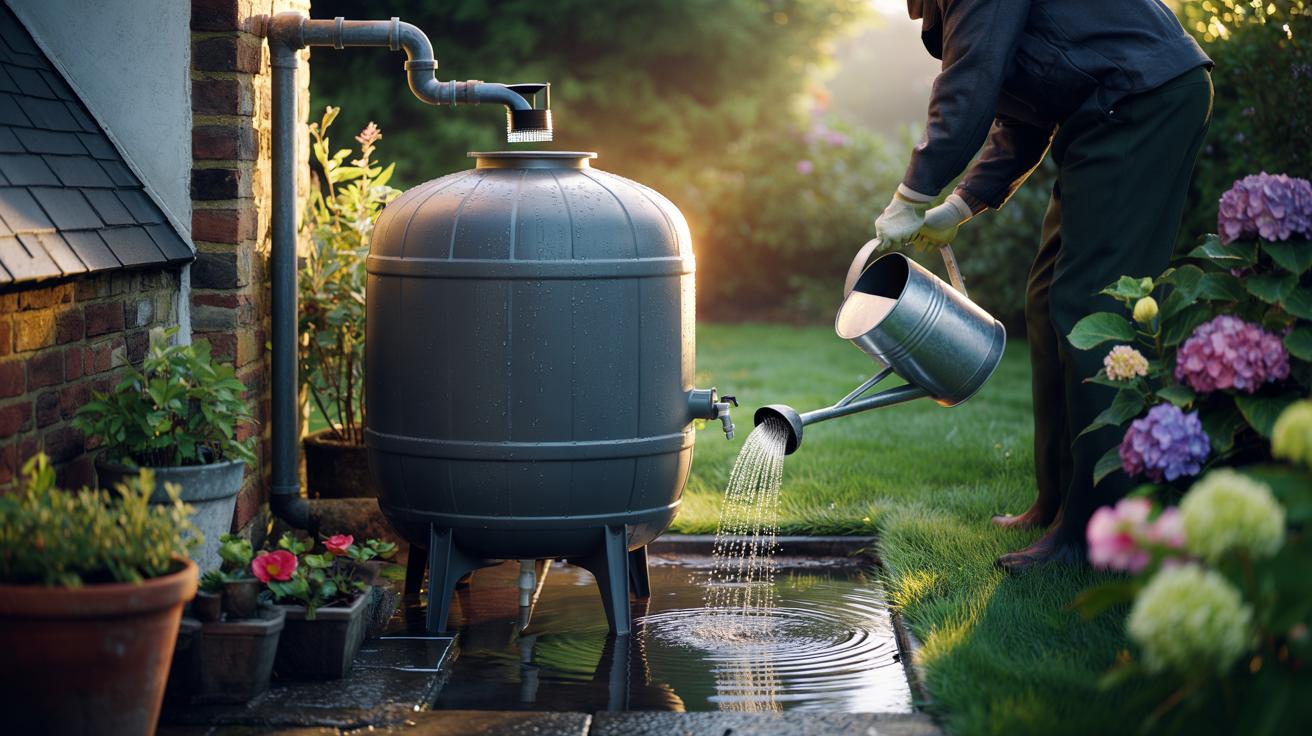
Storage matters just as much. Choose an opaque, lidded water butt or closed tank of food-grade plastic, positioned on a level, sturdy base and fitted with a screened inlet and overflow. A dark tank suppresses algae, while a tight lid deters mosquitoes and reduces the risk of a child or pet falling in. Fit an overflow pipe to a soakaway or rain garden; don’t discharge to sewers. In the UK, follow the spirit of BS 8515 (Rainwater Harvesting) and ensure complete separation from potable fixtures. Add a label: “Non-potable water.”
| Component | Why It Matters | Best Practice |
|---|---|---|
| Roof Surface | Can leach particles/metals | Use slate/tile; avoid copper, zinc, degraded felt |
| Gutters/Downpipes | Debris and droppings enter tank | Install leaf guards and a 1–2 mm mesh screen |
| Tank/Butt | Light fuels algae growth | Opaque, lidded, food-grade plastic with screened inlet |
| Overflow | Prevents flooding and foundation damage | Pipe to soakaway or rain garden; keep rodents out |
Filtering, First-Flush, and Safe Handling
Rain gathers dust, pollen, and rooftop grime as storms begin. A first-flush diverter captures that initial dirty surge and sends it to waste, improving water quality for the rest of the event. As a rule of thumb, divert roughly 0.5–1 litre per square metre of roof per storm; for a small shed (20 m²), a 10–20 litre diverter is effective. Fit a fine pre-filter (200–500 microns) at the downpipe and a 1–2 mm stainless mesh at the tank inlet, so leaves and grit never reach storage. Good filtration is simpler, safer, and cheaper than treatment later.
Keep the system chemical-light. For plants, avoid chlorinated disinfectants and algaecides that can scorch roots or harm soil life. Control algae by excluding light, keeping the lid shut, and using a small bag of barley straw in the tank to inhibit growth naturally. If mosquitoes are a concern, the lid and mesh are your main defence; in the UK, that’s usually enough. When drawing water, use a tap near the base and a watering can rather than a high-pressure sprayer to reduce aerosols. This is gentler on leaves and sensible from a hygiene perspective, particularly in greenhouses where air is still and warm.
Placing and Maintaining Your Water Butt
Set your butt as close to the downpipe as possible on a flat slab or stand rated for the tank’s full weight—500 litres equals half a tonne. Elevation improves flow by gravity and makes it easier to fill cans without bending. Fit a connector kit to the downpipe and keep hoses short to minimise stagnation. In frosty regions, leave expansion space near the top and consider a drain-down in deep winter to protect fittings. Never leave an open container of water in the garden—it’s unsafe and becomes a pest magnet.
Maintenance is light but regular. Clear gutters at least twice a year and after major leaf fall. Rinse the inlet mesh monthly, and empty the first-flush diverter of sediment after big storms. Every six to twelve months, drain and swill the tank: use a soft brush and clean water, or a dash of food-safe citric acid to loosen biofilm, then rinse thoroughly. Check for cracks, UV degradation, and perished seals; replace sun-brittled parts promptly. Keep the area under the overflow free-draining to avoid damp against walls. Label taps clearly and keep a child-resistant cover on where possible. These small habits keep water sweeter and your plants safer.
Using Rainwater to Build Plant Resilience
Soft, low-salt rainwater unlocks nutrients that hard mains water can lock away. Acid-loving calcifuges—camellias, rhododendrons, blueberries—respond with glossier leaves and fewer chlorosis issues. Seedlings and houseplants benefit too, as salt-sensitive roots face less stress. Water early in the morning so foliage dries quickly, and target the soil, not the leaves, to reduce leaf-spot and mildew. For edible crops, avoid foliar splashing close to harvest; keep irrigation directed at the root zone. Rainwater is superb for soil life, so use it generously—but precisely.
Blend practice with observation. In dry spells, alternate rainwater with a dilute seaweed feed to boost trace minerals rainwater lacks. If your butt water smells stagnant, pause use on seedlings and refresh the tank. Watch pH-sensitive blooms: hydrangeas trend bluer with sustained acid watering, pinker with lime. Container gardens love rainwater, but they dry quickly—use a moisture meter or lift pots to gauge heft rather than watering by habit. Aim for fewer, deeper waterings to drive roots down and toughen growth. If you brew compost teas, draw the cleanest water from the tank’s tap, not the bottom sediment layer, and use it the same day.
Harvested well, rain becomes a quiet ally: kinder on roots, gentler on soils, and free. The system is simple—clean catchment, smart filtration, dark storage, and steady upkeep—and the payoff is healthier, more resilient planting with fewer fertiliser and limescale woes. As weather swings between deluge and drought, a well-sited water butt is practical climate adaptation at home. What part of your garden would benefit most from safer rainwater—seedlings under glass, thirsty containers on the patio, or deep-rooted shrubs along the fence?
Did you like it?4.2/5 (25)