In a nutshell
- 🧪 Lemons work because citric acid dissolves limescale (calcium carbonate) and peel oils like limonene lift grease, giving chrome and stainless steel a safe, bright finish with short contact times.
- 🧼 Pro method: dry the tap, rub with a lemon half (optionally with salt or bicarbonate of soda), allow 2–5 minutes’ dwell on robust finishes, treat aerators, then rinse and buff with a microfibre cloth.
- ⚠️ Protect finishes: always perform a patch test, dilute for brass, brushed nickel, and coated black/gold, avoid run-off on natural stone, and never let juice dry on the surface.
- 🛡️ Safety first: do not mix acids with bleach; neutralise any residue with water or diluted bicarbonate and dry thoroughly to stop new water spots forming.
- 🌿 Sustainable routine: low-cost, low-waste cleaning with weekly citrus wipes, occasional deeper descales, improved odour control, and compostable peels for an eco-friendly shine.
Britain’s hard water leaves its calling card on bathroom and kitchen fittings: chalky deposits, water spots, and a dull film that resists ordinary wiping. Professional cleaners reach for a humble citrus hero. A fresh lemon, rich in citric acid and aromatic oils, can cut through limescale and soap scum while leaving taps gleaming and streak-free. The method is simple, quick, and low-waste, making it a favourite on tight turnarounds and eco-conscious jobs alike. This isn’t a gimmick; it’s chemistry you can smell working. Here’s how the “lemon trick” restores brilliance to chrome, stainless steel, and more—plus the caveats that keep delicate finishes safe.
Why Lemons Beat Limescale on Taps
At the heart of the trick is citric acid, a weak organic acid that dissolves calcium carbonate, the stubborn mineral behind white crusts and cloudy rings. When lemon juice touches those deposits, the acid breaks ionic bonds, loosening scale so it wipes away without aggressive scrubbing. Equally useful are lemon’s natural solvents—especially limonene in the peel—which lift greasy residues and fingerprints. Short contact, smart chemistry, and a soft cloth are often all you need.
There’s another edge: the lemon’s low pH helps dislodge soap scum, where calcium and soap bind into a waxy film. Unlike some harsh descalers, lemon is gentle on chrome and stainless steel when used briefly and rinsed thoroughly. It won’t stink out a flat, and it’s food-safe—an advantage around kitchen sinks where aerosols feel out of place. In hard-water postcodes—from London to the Midlands—the lemon method keeps taps consistently bright between deeper cleans, limiting the need for heavy-duty descalers and extending the life of your fittings.
Step-by-Step: The Pro Lemon Method
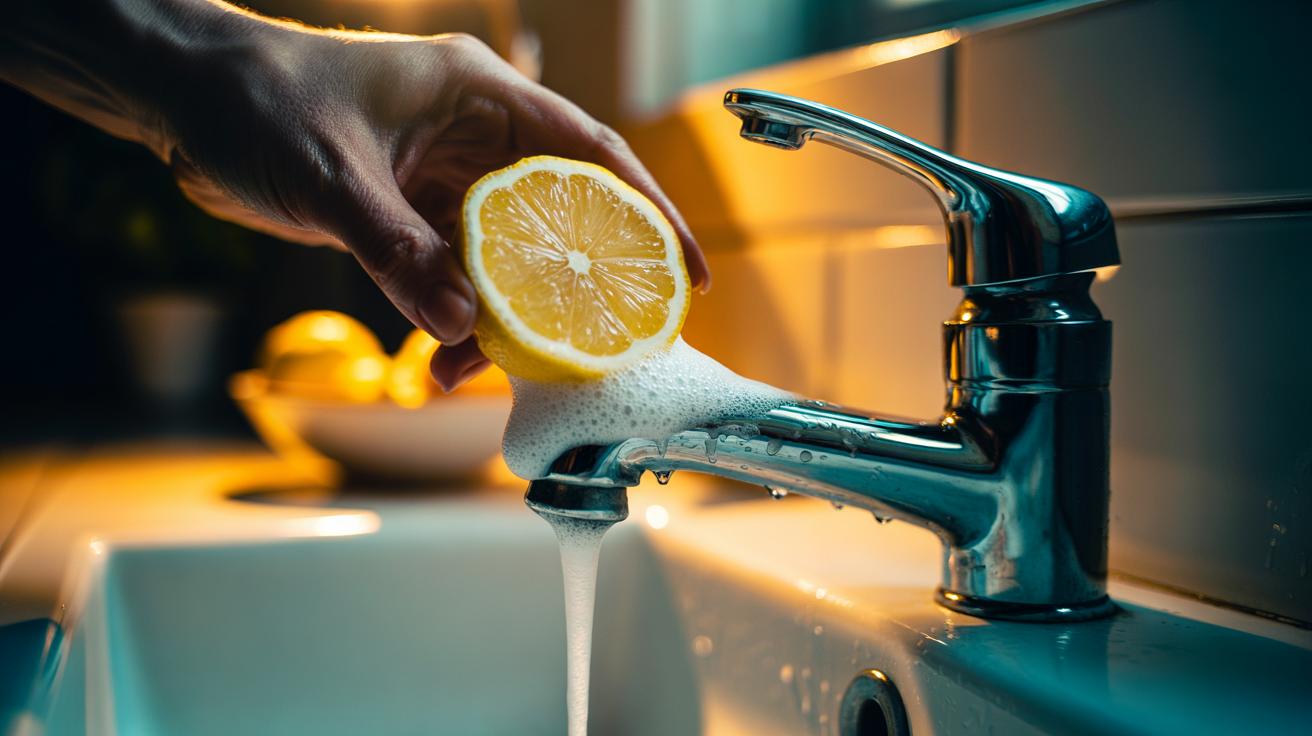
First, dry the tap. Removing surface moisture prevents dilution and gives the citric acid maximum bite. Halve a lemon and squeeze lightly to prime the cut face. For stubborn buildup, dip that face into fine salt or a dusting of bicarbonate of soda for a mild, controlled abrasiveness. Contact time is the secret sauce—aim for 2–5 minutes on robust finishes.
Massage the lemon directly over spouts, bases, and joints. For vertical sections, press a juice-soaked kitchen towel onto the metal and wrap it around the neck. A soft toothbrush helps push juice into the aerator and around tight seams. If the aerator is clogged, twist it off and soak it in lemon juice for ten minutes, then rinse. Always keep an eye on delicate coatings, and never let juice dry on the surface.
Rinse thoroughly with warm water, then buff with a dry microfibre cloth until the metal squeaks—your sign of a residue-free finish. A final pass with the lemon peel’s oily side can add a light sheen, but wipe it off to avoid smears. Never mix lemon or any acid with bleach; that combination can release dangerous chlorine gas.
Protecting Finishes: What to Watch Out For
Most modern chrome and stainless taps tolerate brief exposure to lemon. But lacquered, coated, or living finishes need caution. Always perform a patch test on an inconspicuous area and keep contact short. If you’re unsure, dilute lemon juice 1:1 with water, reduce dwell time, and rinse promptly. For luxury coatings—matte black, brass, or gold—prioritise a gentle clean with diluted solution and immediate drying. When in doubt, shorten the dwell and lengthen the buff.
| Surface | Action | Contact Time | Notes |
|---|---|---|---|
| Chrome | Neat lemon, light rub | 2–5 minutes | Rinse and buff fully |
| Stainless steel | Neat lemon or 1:1 dilute | 2–4 minutes | Wipe with grain if brushed |
| Brushed nickel | 1:1 dilute, gentle touch | 1–2 minutes | Test first; avoid abrasives |
| Unlacquered brass | Very dilute; quick wipe | Under 1 minute | Can alter patina; dry immediately |
| Coated black/gold | Spot test; minimal time | Under 1 minute | Risk of dulling if overexposed |
| Natural stone nearby | Avoid run-off | N/A | Acid etches marble and limestone |
If any tangy scent lingers, a quick wipe with a cloth dampened in plain water—or a splash of diluted bicarbonate solution—neutralises residue. Then dry completely. That last step prevents new spots forming from tap water itself.
Beyond the Shine: Odour, Hygiene, and Sustainability
The lemon method doesn’t just make metal pop. Its acidity lowers surface pH, discouraging bacterial growth on high-touch areas and tackling the musty odours that cling to sink surrounds. The peel’s limonene lifts greasy fingerprints, especially in kitchens where oils build up invisibly. It’s fast, quiet, and safe around pets and food prep, an advantage in compact flats or during late-night resets between guests. Small habit, big impact—weekly citrus wipes prevent heavy descaling later.
There’s also the practical economy. One lemon often treats multiple taps for pennies, replacing a cupboard’s worth of single-use chemicals. No aerosol, minimal plastic, compostable waste. Use leftover halves to deodorise the bin, or simmer peels to scent the room after a deep clean. In hard-water regions, adopt a cadence: quick lemon wipe weekly, deeper descale monthly if needed, and routine microfibre buffing after each wash-up. Your taps stay bright, water spots never gain a foothold, and maintenance becomes a 90-second ritual rather than a Saturday chore.
That’s the professional citrus shortcut—sharp, simple, and quietly effective. The chemistry dismantles deposits, the method respects finishes, and the cost is almost laughable. With a lemon in the fruit bowl, spotless taps are always within reach, free from harsh fumes or heavy scrubbing. Short contact, thorough rinse, dry buff: that trio is your new routine. Will you try the lemon trick on your tapwork this week—or adapt it with your own twist, perhaps a salt boost for stubborn spots or a wrap for busy household mornings?
Did you like it?4.4/5 (20)