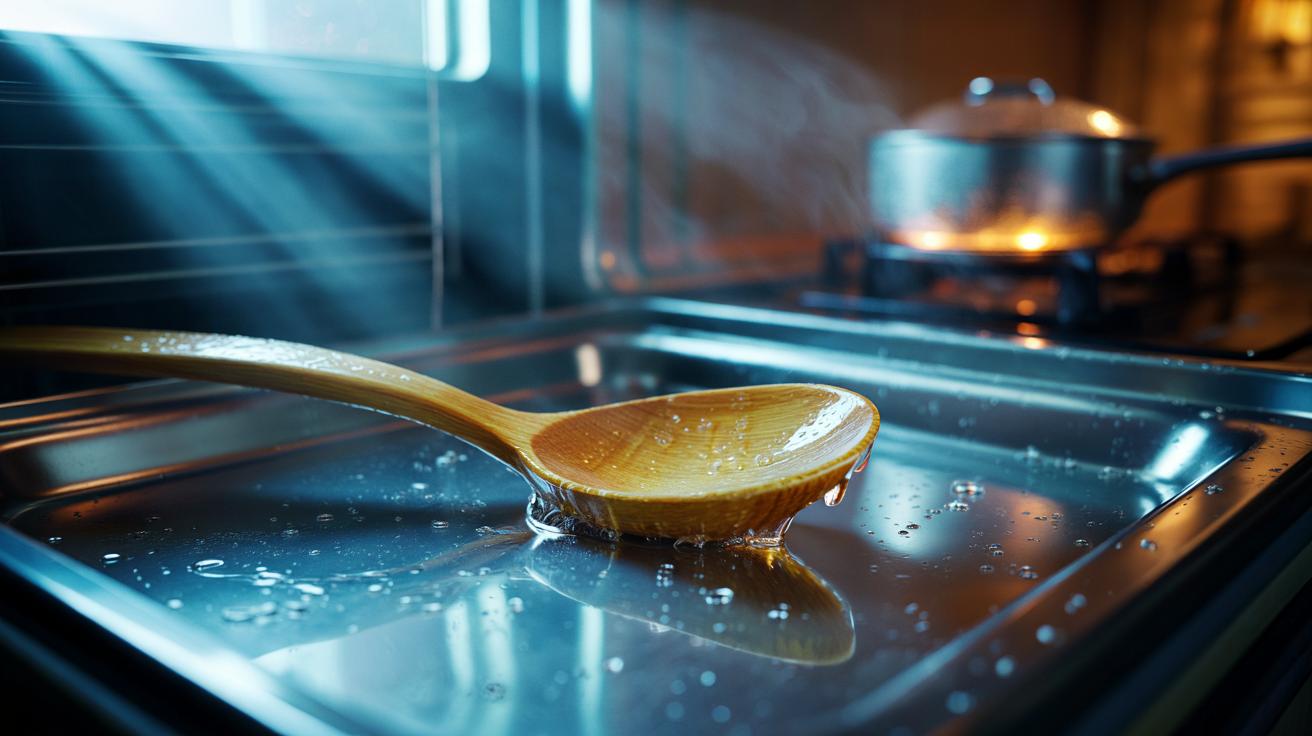
In a nutshell
- 🪵 Wood is porous: Dishwasher heat and steam drive water into the grain, causing swelling, microcracks, and a rough surface that traps residue.
- 🧼 Detergent residues linger: Surfactants and enzymes bind to cellulose, creating soapy off-flavours that reappear when the spoon heats during cooking.
- 🔥 Rancid oils form: High-temp wash and dry cycles oxidise absorbed cooking fats, releasing stale, metallic aromas into sauces and stews.
- 🧪 Low-level health concern: Traces of cleaning agents can migrate into hot food and steam—especially problematic for baby food and delicate dishes.
- 🧽 Better care equals better taste: Handwash, dry immediately, and condition with food-grade mineral oil and beeswax; never soak, and retire spoons with deep cracks or persistent odours.
Most of us treat a wooden spoon as indestructible, tossing it into the dishwasher with the plates and calling it a day. It looks sturdy, feels solid, and survives stir-fries and stews without complaint. Yet the humble utensil hides a complex interior that reacts badly to modern machine washing. The unexpected culprit isn’t just heat or water; it’s chemistry meeting biology inside the wood’s tiny tunnels. The result can be a spoon that slowly turns into a sponge for detergent and old cooking fats, then feeds those flavours back into your food. Here’s why that matters, what actually happens inside the grain, and how to keep your favourite spoon—and your dinner—tasting right.
The Science Inside the Grain
Wood looks solid, but it’s a network of microscopic tubes and cells. Those wood fibers—cellulose bound with lignin—behave like capillaries, pulling in liquid under heat and pressure. A dishwasher cycle drives hot water and steam deep into those channels, then blasts dry air that forces the moisture back out just as aggressively. This swelling-and-shrinkage routine doesn’t merely warp a spoon; it can open microcracks and roughen the surface, creating more nooks for flavours, dyes, and residue to linger.
The surprise is not the warping. It’s what the water carries. Modern detergents contain surfactants, builders, and enzymes designed to strip stubborn residue from ceramic and steel. In wood, those molecules don’t just rinse away. They bind to cellulose-rich surfaces and lodge in pores, leaving a faint soapy film that’s hard to smell when dry but unmistakable once the spoon hits heat and fat in a pan. Think of it as a flavour time capsule, primed to release the moment you sauté.
Over repeated washes, the spoon’s interior becomes an alternating reservoir for detergent and cooking oils. That stop-start journey degrades the fibers, encouraging splinters and a fuzzy feel. Even if you can’t see damage yet, the taste test tells the tale: a subtle, persistent soapiness that clings to custards, risottos, even porridge. It’s not your recipe—it’s your spoon.
Detergent Chemistry: Soap Flavour, Residue, and Risk
Dishwasher detergents are proudly tough. They use alkaline detergents, oxygen bleach, and targeted enzymes to dismantle proteins and fats. On non-porous plates, that’s brilliant. On wood, the same chemistry can become a hitchhiker. Surfactants latch onto fibers; enzymes can penetrate softened grain; oxidisers may lighten the surface while leaving the internal matrix stressed. The net effect is a spoon with residue you cannot fully rinse and a palate-pricking note that reappears when the wood warms.
There’s a sensory angle too. Surfactants reduce surface tension, which enhances aroma transfer when food sizzles. A spoon faintly loaded with detergent can amplify off-notes, making a delicate sauce taste oddly medicinal. That’s why some cooks notice the problem more with custards or cream sauces; fat is a superb courier for trapped compounds. Soap taint doesn’t take much to spoil a dish built on subtlety.
Health concerns tend to be low-level rather than dramatic, but they’re not fanciful. Chronic exposure to small quantities of cleaning agents isn’t desirable, especially if the spoon is used for baby food or high-heat stirring where volatiles release into steam. The practical takeaway is simple and useful: keep detergent chemistry on plates and glasses; keep it away from porous tools that meet hot fat and direct heat.
Heat, Dry Cycles, and Rancid Oils
Wooden spoons naturally absorb a whisper of the oils they stir. That’s normal and even protective when maintained properly. In a dishwasher, though, high heat and forced-air drying accelerate oxidation of those embedded lipids. Oxidised fats turn rancid, producing cardboardy, metallic aromas that hide until the next simmering pot teases them out. The dish tastes stale. You blame the stock; the spoon might be the saboteur.
| Factor | In the Dishwasher | Result for Spoon | Result in Food |
|---|---|---|---|
| Surfactants | Driven deep into pores | Soapy residue persists | Subtle detergent flavour |
| Heat & Steam | Rapid swell-shrink cycles | Microcracks, raised grain | More places for taint |
| Oils in Wood | Oxidise during dry cycle | Rancid, lingering odours | Stale taste in sauces |
There’s also the hygiene myth. Yes, dishwashers sanitise hard surfaces. But with wood’s porosity, the cycle can trap moisture deeper than a quick handwash, especially if the spoon cools slowly in a crowded rack. Trapped damp invites odours and discolouration. Over time, edges roughen; splinters appear. That’s your prompt to switch to better care rather than harsher cleaning.
How to Clean and Restore Wooden Spoons Properly
Skip the dishwasher. Wash by hand with hot water and a dab of mild soap. Scrub promptly after cooking, then rinse thoroughly and dry immediately with a clean towel. Never soak a wooden spoon—extended immersion swells fibers and sets stains deeper. Stand it upright to finish drying so moisture escapes the handle end. For stubborn smells, use a baking soda paste or a brief white vinegar rinse, then rinse with plain water and dry.
Condition the grain. Every few weeks, apply food-grade mineral oil or a blend of mineral oil and beeswax. Warm the spoon slightly first; oil penetrates better. Wipe off excess and let it rest overnight. This replenishes the wood’s hydrophobic barrier, slowing absorption of cooking liquids and making cleanup faster. If the surface feels fuzzy, a light pass with fine sandpaper restores smoothness before oiling.
Know when to retire. Deep cracks, dark streaks that won’t lift, or persistent off-flavours despite cleaning are signs it’s time for a replacement. Choose close-grained hardwoods like beech, maple, or cherry, and avoid lacquered finishes that can flake. Store spoons away from the hob’s steam and sunlight, and they’ll last for years—without seasoning your risotto with yesterday’s detergent.
In the end, the unexpected reason to keep wooden spoons out of the dishwasher isn’t only about cracks or warping. It’s the quiet chemistry: surfactants and oxidised oils lodging in a porous matrix, then reappearing as unwelcome flavour in your next meal. Handwashing, fast drying, and periodic oiling protect both the tool and the taste of your food. It’s simple, quick, and more reliable than any “sanitise” button. Which ritual will you adopt tonight to keep your wooden spoons—and your cooking—clean, sweet, and truly delicious?
Did you like it?4.6/5 (28)