In a nutshell
- 🌅 Morning misting mimics dew, boosts leaf‑surface humidity, and deters spider mites, thrips, and whiteflies—naturally; mist early so foliage dries by evening.
- 🧴 Focus on technique: use a fine atomiser with tepid filtered or rainwater, target leaf undersides, keep passes light, and avoid wetting soil to prevent fungus gnats; add brief airflow.
- 🌿 Match species to method: ferns, calatheas, palms, orchids benefit; succulents, cacti, African violets don’t—tailor frequency to room climate and plant response.
- 🧭 Build a consistent routine: pair misting with quick daily inspection, wipe leaves weekly, and adjust based on cues like webbing, honeydew, or persistent dampness.
- 🛡️ Combine with integrated pest management (IPM): clean foliage, use sticky traps for monitoring, quarantine newcomers, avoid overfeeding, run a small fan, and reserve mild soap or neem for outbreaks.
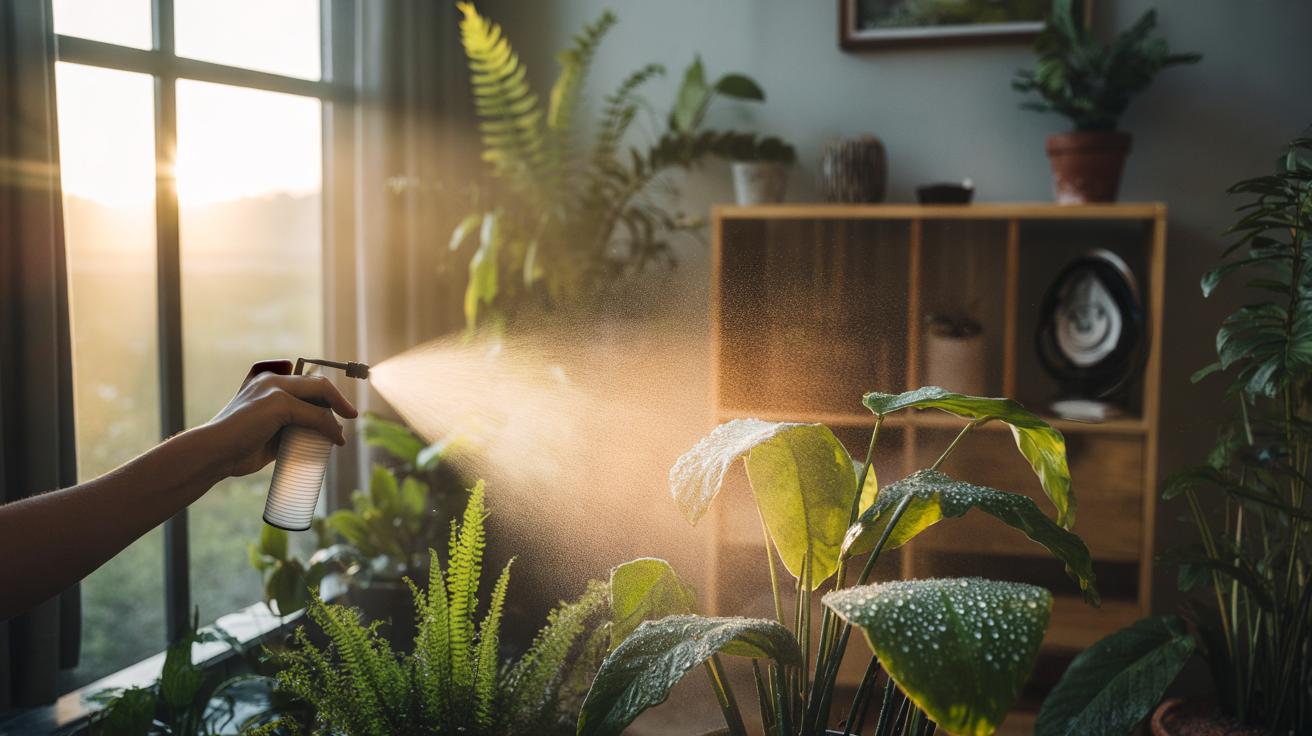
Dawn can be your plants’ greatest ally. When you step into a room just as the light arrives, a fine spray bottle in hand, you are recreating nature’s own protective veil. A light, morning mist on foliage mimics dew, nudging pests off balance while giving your indoor jungle the humidity bump it craves after a dry night. The trick is timing, technique, and restraint. Done well, this habit deters spider mites, discourages thrips, and makes life harder for whiteflies—without resorting to harsh chemicals. Think of it as a daily headline for plant health: short, gentle, consistent. And very British in its ritual.
Why Morning Misting Works Against Common Pests
Most indoor pests thrive in arid pockets of air, especially around warm windows and radiators. A targeted, fine misting briefly raises humidity at the leaf’s surface—the so‑called boundary layer—making it tougher for spider mites to feed and multiply. Their delicate bodies desiccate in dry conditions and flourish below 40% relative humidity; your dawn routine bumps that microclimate upward, tipping the balance. A plant that wakes to gentle dew is less inviting to opportunistic colonisers. For whiteflies and thrips, the sudden wet film disrupts movement and landing, buying your plants precious breathing space.
There’s also a mechanical win. A very light spray dislodges early webbing, knocks loose newly laid eggs, and encourages cleaner leaf surfaces where pests have less dust to hide in. Combined with a soft cloth wipe once or twice a week, leaves stay glossy and photosynthetically efficient. Morning matters because leaves warm and dry through the day, reducing the risk of lingering moisture inviting mould. By nightfall, the foliage should be dry to the touch.
Precision is key. Aim for foliage, not compost. Never soak the soil when you are misting to deter pests—that invites fungus gnats. A fine atomiser, held 20–30 cm from the plant, gives coverage without drips. Finish by nudging a window ajar or running a small fan for ten minutes to keep the air gently moving.
How to Build a Safe Daily Misting Routine
Set your cue with the kettle. As it boils, pick up a clean, dedicated mister filled with tepid rainwater or filtered water to avoid limescale spots. Use the finest spray you can find; barista or hair‑mist bottles work brilliantly. Hold at chest height, sweep the plume across the canopy, and pay special attention to leaf undersides where pests congregate. Two or three passes per plant is enough. Leaves should look kissed by fog, not drenched. In bright rooms, mist early so the day’s light and warmth wick away moisture.
Adopt a rhythm that suits your space. In heated flats, daily misting steadies fluctuations; in cooler homes, every other day suffices. Watch cues: crisp leaf edges, fine webbing, or dusty sheens signal you to increase frequency; persistent wetness or spotting asks you to ease off. Team the routine with a quick inspection—stems, new growth, the soil rim. Wipe any sticky residue (honeydew) promptly. A nudge of airflow afterwards prevents stagnant pockets that pests love.
Be plant‑specific. Ferns, calatheas, and palms welcome it. Succulents and cacti do not. Avoid blasting buds or tightly furled crowns where water can linger. And ignore the old myth about water droplets “burning” leaves indoors—our sun through glass is rarely harsh enough. What matters is avoiding prolonged damp on shade‑loving foliage.
Plants That Love It, Plants That Don’t
Think of misting as a natural fit for rainforest understory plants. Ferns, marantas, calatheas, philodendrons, and many palms respond with perkier leaves and fewer mite outbreaks when the air is freshly humid in the morning. Epiphytes such as orchids and tillandsias also appreciate light, regular misting that wets surfaces without saturating roots. These species evolved to greet dew and fog; you’re recreating a familiar script.
Other plants prefer you keep the mister holstered. Succulents, cacti, and fuzz‑leafed divas like African violets and some begonias resent water sitting on their foliage, which can spot or encourage rot. Mediterranean herbs—rosemary, lavender—like it airy and bright. If in doubt, test gently, observe for 48 hours, and adjust. When a plant says “no thanks” with limp patches or persistent spotting, shift to room‑level humidity strategies instead.
| Plant Type | Good for Misting? | Pest Pressure | Note |
|---|---|---|---|
| Ferns, Calatheas, Marantas | Yes | Spider mites, thrips | Mist undersides; keep air moving |
| Palms, Schefflera | Yes | Mites, scale | Combine misting with leaf wiping |
| Orchids, Tillandsias | Yes, lightly | Mealybug, scale | Avoid wet crowns; morning only |
| Succulents, Cacti | No | Mealybug | Boost room humidity, not leaves |
| African Violets, Hairy Begonias | No | Thrips | Bottom‑water; avoid leaf wetting |
Pairing Misting With Smart Prevention
Misting becomes truly effective inside a broader integrated pest management approach. Keep dust off leaves—mites thrive on grime—by wiping with a damp, lint‑free cloth once a week. Rinse foliage in the shower monthly to flush crevices, then let plants drain and dry in bright shade. Clean leaves are resilient leaves. Place yellow sticky traps near pots to monitor whiteflies and gnats, not as a cure but an early warning system that guides your next steps.
Quarantine new arrivals for 10–14 days and inspect with a hand lens. Space plants so their leaves don’t constantly touch; a little gap trims the “pest motorway” effect. Keep feeding balanced and moderate—over‑fertilised, sappy growth is a buffet for sap‑suckers. Water with care to avoid soggy compost that invites gnats. A small oscillating fan, run for a few minutes after misting, discourages fungal issues by drying surfaces evenly.
Natural allies help too. A monthly wipe using water with a drop of mild, fragrance‑free soap can break sticky residues where pests cling, followed by clear water the next day. Some growers occasionally rotate in neem or horticultural soap for outbreaks, but your daily routine remains the gentle core. Consistency beats intensity—little and often keeps pests guessing and plants strong.
Misting at sunrise is not a fad; it’s a quiet intervention that restores a familiar dawn rhythm to houseplants and wrong‑foots pests before they settle in. Keep it light, keep it regular, and listen to what each species tells you in the days that follow. Pair the habit with clean leaves, good spacing, and a touch of airflow, and you’ll see fewer outbreaks and sturdier growth. It’s the simplest newsroom scoop for plant care: humidity, timing, vigilance. How will you adapt your own morning routine to give your plants that protective edge?
Did you like it?4.4/5 (30)