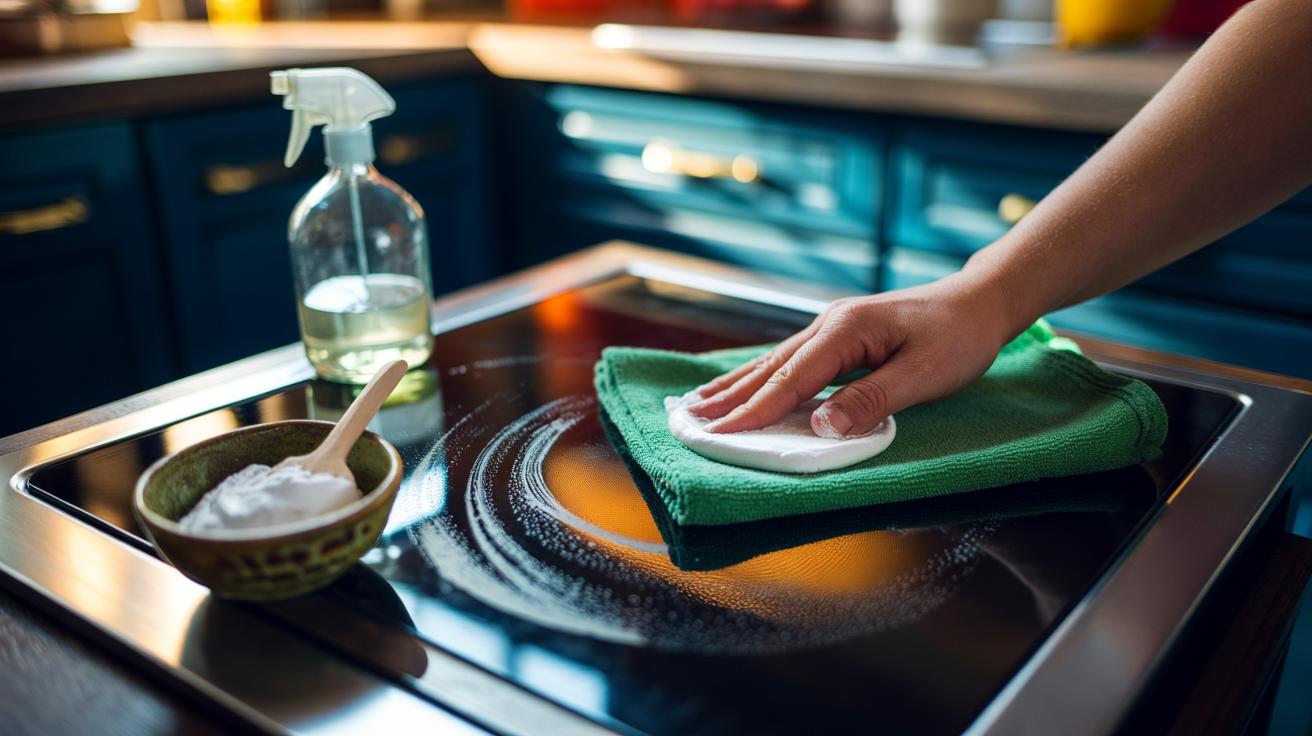
In a nutshell
- 🧪 Use a bicarbonate of soda paste (approx. 3:1 bicarb to warm water) with microfibre cloths, a plastic scraper, and optional white vinegar; gentle abrasion lifts grease without harsh chemicals—always test a corner and avoid wire wool.
- 🧊 Start with a cold oven, remove crumbs, spread the paste in overlapping swirls, keep off seals/vents, and let it dwell 20–40 minutes; cover with cling film to prevent drying and re-mist if it crusts.
- 🧼 Agitate lightly, then wipe the slurry using a well-wrung cloth; spritz a touch of vinegar to clear any alkaline film, then buff dry with a clean microfibre for a streak-free shine—check from the side with a torch.
- 🛡️ Practice smart safety: wear gloves, avoid inhaling dry powder, keep children and pets away, don’t flood edges, and bin the spent slurry; expect 40–60 minutes total and a cost of mere pennies.
- 🧩 Tackle stubborn spots (caramelised sugars, cheesy spills) by reapplying paste, extending dwell under cling film, and nudging with a shallow-angled scraper; avoid razors on coated glass and stay off pyrolytic enamel frames.
Oven doors tell the story of busy family dinners and weekend bakes, but that cloudy film on the oven glass can make even a spotless kitchen look tired. If you’d rather avoid harsh cleaners, there’s a smarter, calmer way: a simple paste you can mix in seconds with cupboard staples. It tackles baked-on splatters, grease haze, and finger marks without scrubbing yourself sore or filling the room with fumes. This gentle method relies on mild abrasion and smart dwell time, not brute force. Below, I’ll explain exactly what to use, how it works, and the best technique to achieve gleaming glass you’ll be proud to peer through while the roast turns golden.
What You Need and Why It Works
The hero is bicarbonate of soda, a mild alkali with tiny crystals that behave like a soft polishing compound. In a damp paste, it loosens fatty deposits and breaks the bond between baked-on grime and glass, so residue wipes away without gouging the surface. Add warm water. That’s it. If you like, keep a small mister of white vinegar for the end to fizz away any film, but it’s optional. You’ll want two microfibre cloths, a soft-bristled brush for edges, and a plastic scraper for stubborn specks. Avoid metal scourers or wire wool on glass—one rash scrub can leave permanent haze.
| Item | Purpose / Notes |
|---|---|
| Bicarbonate of soda | Primary cleaner; gentle abrasive and mild alkali |
| Warm water | Creates paste; improves spread and dwell |
| Microfibre cloths (2–3) | Lift residue; final buff and shine |
| Plastic scraper | Coax off stubborn spots without scratching |
| Soft brush/cotton buds | Detail work around corners and trims |
| White vinegar (optional) | Quick fizz to clear any alkaline film |
| Old towel | Protect floor and door edge |
Use roughly three parts bicarb to one part warm water—aim for a yoghurt-thick paste that clings, not drips. This isn’t a perfumed clean; it’s refreshingly simple and low-cost, with no sharp odours and no dyes. It suits most tempered oven glass and enamel surrounds, but always test a tiny corner first. If your oven is brand-new or coated with a special anti-fingerprint layer, check the manual for any abrasives warnings.
Step-by-Step: Mixing and Applying the Paste
Make sure the oven is off and completely cold. Remove the racks so you can reach the glass comfortably, then spread an old towel beneath the door to catch drips. Wipe away loose crumbs with a dry cloth; you want the paste working on grime, not grit. In a small bowl, combine bicarbonate of soda with warm water to a spoonable consistency. Stir until smooth—no gritty clumps. Now, with a damp microfibre, smear a generous layer across the inner glass, working in overlapping swirls. Keep away from rubber seals and vent holes. A little care here saves a lot of rinsing later.
Let the paste sit. Twenty minutes for light haze; up to forty for baked-on clouds. To supercharge dwell time, lay a sheet of cling film loosely over the paste so it doesn’t dry out, especially on vertical panels. Do not let the paste bake dry or harden; if it starts to crust, mist lightly with warm water to rehydrate. After the wait, agitate with the cloth using light, even strokes. You’re persuading, not grinding. For specks, tip the plastic scraper to a shallow angle and nudge, never gouge. The goal is an even slurry of lifted residue ready to wipe away cleanly.
Removing Residue and Restoring Streak-Free Shine
Now for the satisfying part. Rinse your microfibre in warm water, wring it very well, and wipe away the slurry in long, confident passes. Rinse and wring often; a clean cloth lifts faster than an overloaded one. If you spot a dull film, lightly spritz with a touch of white vinegar and immediately wipe—this quick fizz neutralises any leftover alkalinity without drama. Take care not to flood edges or soak seals, and never spray into vents. The glass should now look clearer, but the final polish makes it gleam.
Switch to a fresh, dry microfibre cloth and buff in zigzags, then finish with short vertical strokes the way a window cleaner would. Check from a side angle with a torch or your phone light to spot whisper-thin streaks that daylight can conceal. Tight corners? Use a soft brush or cotton buds, dampened and well-wrung. If a mark lingers, repeat a short dwell rather than scrubbing harder. Patient repetition beats aggressive abrasion every time, preserving the pristine finish of tempered glass. Some swear by a final wipe with barely damp newspaper; if you try it, keep pressure feather-light to avoid micro-scratches.
Common Problems, Safety, and Small Print
Caramelised sugar splatters and cheesy overflows are stubborn because sugars and proteins fuse into a glossy lacquer. Don’t panic. Reapply the bicarbonate paste, extend the dwell, and keep it moist with a light mist of warm water under cling film. Work the edge of a plastic scraper at a shallow angle, gliding rather than chopping. Avoid bare razor blades on modern coated glass unless your manufacturer explicitly approves them. For pyrolytic ovens, mind the enamel frame: stay on the glass and wipe away any paste that strays. When in doubt, test first and proceed gently.
Safety is straightforward. Wear gloves if you have sensitive skin, and avoid inhaling dry bicarb dust when mixing—add water slowly. Keep electrics off, elements cold, and children or pets out of the splash zone. Dispose of the spent slurry in the bin rather than washing large amounts down the sink. Time and cost? About 40–60 minutes end to end, and pennies per clean. The result is reliable, repeatable, and free of harsh fumes—ideal for small flats or winter days with the windows shut. For upkeep, a quick monthly wipe with a weaker paste keeps the shine effortless.
If a spotless glass door changes how you feel about cooking, you’re not imagining it; shining surfaces make kitchens feel calmer and food look better. This simple paste gives you that without pricey products or heavy scents, and the method slots neatly into a weekend reset. It’s gentle on surfaces, kinder to the air in your home, and tougher on grime than it looks. Ready to try it on your oven door this week—or will you tweak the routine with your own twist, like lemon zest in the rinse or a different buffing cloth? What will be your go-to tweak for a glass that gleams?
Did you like it?4.7/5 (26)