In a nutshell
- 🧹 Skirting boards act as dust reservoirs; foot traffic, drafts, and convection resuspend particles, so cleaning reduces what returns to your breathing zone.
- 🌬️ Regular wipe-downs cut spikes in PM2.5/PM10 and limit re-emission of SVOCs, easing allergy symptoms and reducing musty odours.
- 🧽 Use a HEPA vacuum, a slightly damp microfibre cloth, and low-VOC cleaners; avoid oversaturating timber and heavily fragranced products.
- 🔄 Align with airflow: clean before dusting higher surfaces, ventilate when possible, and consider a HEPA purifier during winter shut-in periods.
- 📅 Set frequency by traffic: weekly for halls and living areas, monthly for bedrooms; consistent care keeps rooms cleaner longer and improves overall indoor air quality.
Indoor air can be dirtier than the air outside, and the culprits aren’t always obvious. In British homes, skirting boards (baseboards to our friends across the pond) quietly accumulate a cocktail of dust, pet dander, soot, and sticky residues that harbour allergens. When we walk, vacuum, or turn on the heating, those particles re-enter the room’s breathing zone. Clean lines and glossy paint may look tidy, yet the narrow ledge along the wall behaves like a shelf for microscopic pollutants. Experts point out that routine cleaning of skirting boards removes a key reservoir of settled particles, helping the entire house breathe easier. The fix is simple, low-cost, and surprisingly effective.
How Skirting Boards Become Dust Reservoirs
Skirting boards sit at the precise height where airflow meets foot traffic. Every step kicks up particles; every draft nudges them towards walls; every radiator cycle creates convection that lifts tiny fragments, then lets them settle again. The flat top of a board acts as a ledge for particulate matter (PM), fibres, pet hair, and fragments of tyre dust that sneak in from outdoors. Electrostatic attraction doesn’t help, either: charged particles cling to painted surfaces, then build into a grey film that looks harmless but behaves like a slow-release capsule.
There’s biology in the mix. Dust harbours mite allergens, mould spores, and bacteria-laden debris that can trigger symptoms when disturbed. Add cooking aerosols and the sticky condensates from candles or fireplaces, and you get a thin biofilm that traps odours and semi-volatile compounds. What sits on your skirting boards eventually ends up in your lungs. The effect intensifies near doorways, stairs, and radiators, where air movement is strongest. In homes with pets, the boards become highways for dander. Left alone, the load grows, and day-to-day life turns it airborne again.
Because this reservoir lives at floor level, toddlers, crawling infants, and pets occupy the zone where concentrations peak when dust is disturbed. Even if your carpets are meticulously vacuumed, those narrow ledges re-seed the room. Cleaning them interrupts that loop.
The Air-Quality Payoff of a Regular Wipe-Down
Removing settled dust at the source lowers the amount available for resuspension. That means fewer PM2.5 and PM10 spikes during chores, calmer nose and throat exposure for allergy-prone households, and a small but tangible drop in the background haze that settles on furniture. Indoor air specialists describe a “reservoir effect”: reduce the mass on ledges and edges, and activity-driven bursts decline. A quick pass along the boards can punch above its weight because it disrupts the easiest pathway back into the air you breathe.
It also tackles chemistry. Grimy films absorb semi-volatile organic compounds (SVOCs) from sprays and scented products; cleaning limits re-emission. In damp corners, wiping removes nutrients mould likes to feed on. Pair this with HEPA vacuuming and you’ll notice rooms stay cleaner longer, with fewer musty notes after heating kicks in. For clarity, here’s how different pollutants interact with boards and what cleaning achieves:
| Pollutant/Source | Where It Settles | Why Cleaning Helps |
|---|---|---|
| Allergens (mites, pet dander) | Top edges, corners, behind furniture | Removes reservoirs that flare symptoms when disturbed |
| Particulate matter from outdoors/cooking | Ledges near doors, radiators, stairs | Reduces resuspension during walking and heating cycles |
| SVOCs and odour-carrying films | Painted, glossy surfaces | Limits slow re-release into indoor air |
| Mould spores in damp spots | Cold bridges, bathrooms | Removes nutrients; enables targeted disinfecting |
The result isn’t a miracle cure, but it’s measurable in daily comfort: less dust shimmer in sunlight, fewer throat tickles on cleaning day, and a fresher, lighter feel to the room.
Safe, Effective Methods (And What to Avoid)
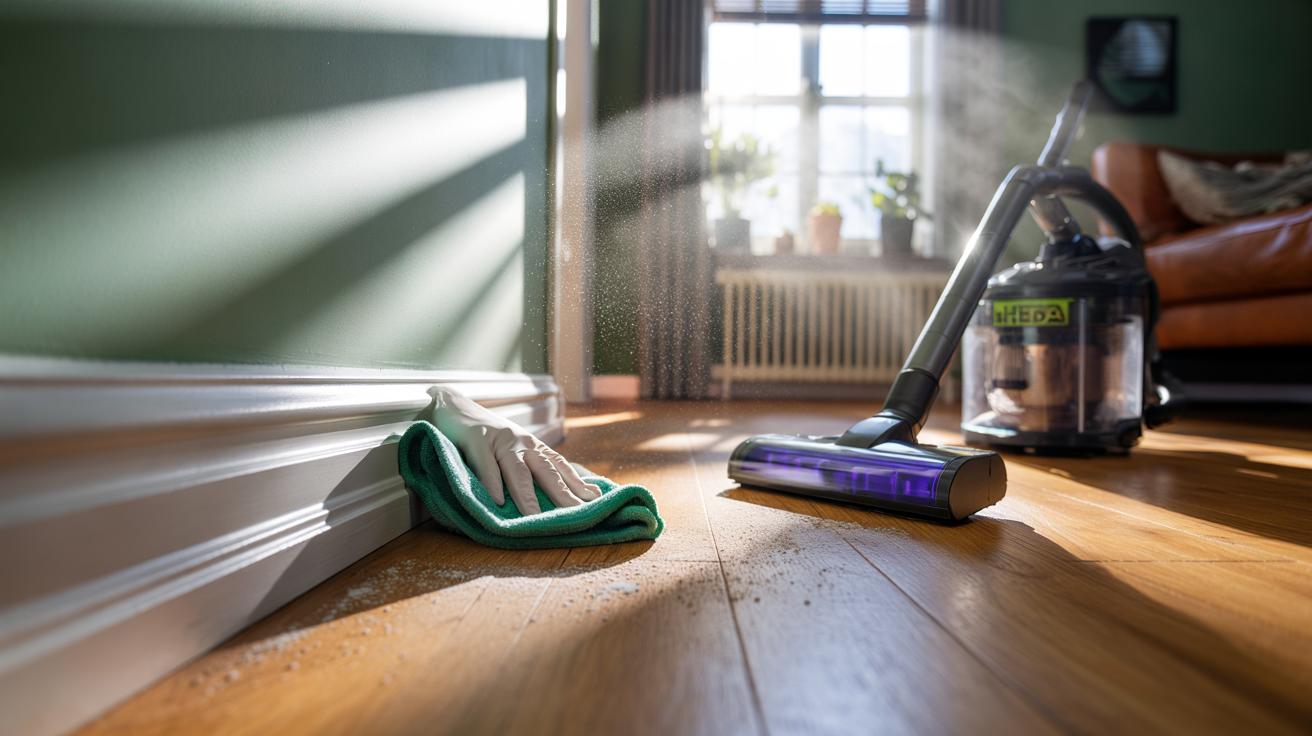
The right technique matters. Start by vacuuming the boards with a HEPA-equipped machine and a crevice tool to capture loose debris. Follow with a microfibre cloth slightly dampened with warm water and a drop of mild detergent; wring thoroughly so you’re lifting, not smearing. Work from top edge to bottom profile, then along the floor junction. Always capture dust, don’t just push it around. For ornate profiles, a soft brush attachment or a dry detailing brush paired with the vacuum prevents redistribution.
Mind the chemistry. Strong, fragranced cleaners can raise indoor VOCs and irritate airways. Choose low-VOC, fragrance-free products or a simple solution of washing-up liquid. Avoid saturating timber skirtings; excess moisture can lift paint and encourage mould at the wall base. For scuffs, use a magic eraser sparingly and rinse the area; these are abrasives in disguise. Where mould is visible, wipe with detergent first, then target remaining staining with an appropriate mould cleaner, ventilating well.
Finish by drying with a clean cloth to prevent streaks and water marks that attract fresh dust. Pop felt pads under furniture to limit scuffs that trap grime. A final vacuum pass along the floor line collects what the cloth dislodged. Routine beats heroics: small, consistent care outperforms occasional deep cleans.
The Role of Ventilation, Heating, and Home Habits
Skirting boards sit in the theatre of household air movement. Radiators create convection loops that sweep particles up the wall and back into the room; undercut doors funnel draughts along the floor; children and pets are natural dust stirrers. Align cleaning with these dynamics. Wipe boards before you dust higher surfaces, then run the extractor or crack a window if outdoor air quality is acceptable, letting disturbed particles disperse rather than resettle. An air purifier with HEPA capture can help during and after a clean in winter, when windows stay shut.
Habits count. Shoes-off policies, sturdy doormats inside and out, and regular pet grooming dramatically cut what lands on ledges. In busy hallways or open-plan living rooms, weekly attention keeps the reservoir small; in bedrooms and low-traffic corners, monthly is often enough. Allergy sufferers may benefit from a tighter schedule during pollen seasons. Think of your skirting boards as the set point for the room’s dust load: keep them clear, and everything above stays cleaner for longer.
Mind seasonal shifts. Autumn lighting shows dust in side glare; spring brings pollen; winter heating dries the air and boosts static, so particles stick. Adjust your cadence accordingly, and combine wiping with targeted vacuuming of edges and under furniture. The aim is not perfection, but a calmer baseline in the air you breathe.
It’s an unglamorous job, yet it pays back every day. Clean skirting boards shrink the dust reservoir, blunt activity-driven spikes, and reduce the sticky films that hold odours and SVOCs. The technique is simple, low-cost, and easy to add to a routine already built around floors and worktops. Treat those narrow ledges as part of your home’s air system, not just its trim. With that mindset, the air feels lighter and rooms stay fresher between big cleans. How will you rethink your weekly tidy to give your skirting boards — and your lungs — a fairer deal?
Did you like it?4.4/5 (28)