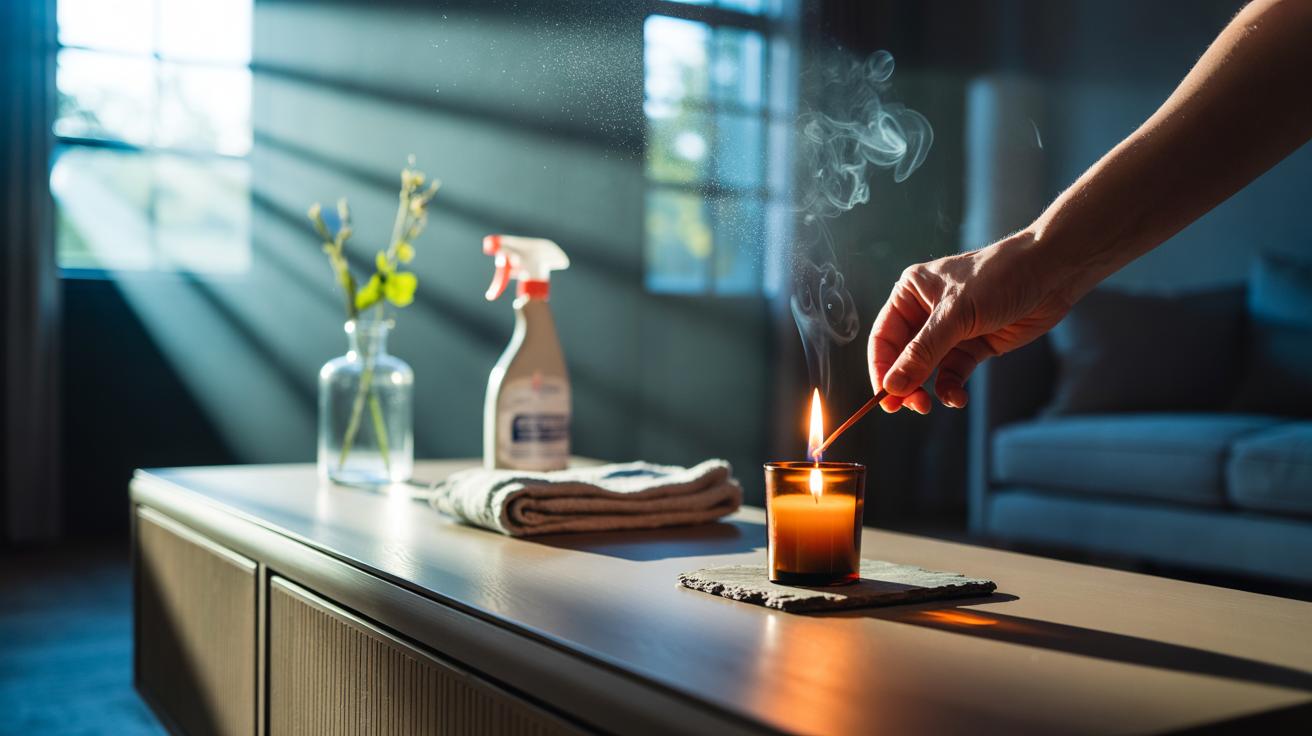
In a nutshell
- 🧠 Lighting a candle taps the olfactory bulb’s direct links to the amygdala and hippocampus, creating powerful context-dependent memory that associates tidy space with calm and cues a parasympathetic downshift.
- 🕯️ As a ritual, the flame delivers closure, countering the Zeigarnik effect, releasing a satisfying reward signal, and reinforcing identity through habit stacking after the final wipe-down.
- 🌗 Sensory contrast matters: soft candlelight becomes a focal point; pair with 4–6 breathing to nudge the vagus nerve and deepen a rest-and-digest state, turning order into embodied ease.
- 🗺️ Choose a consistent signature scent to bind “clean-and-calm”: citrus for fresh alertness, woods for grounding, herbal for soothing, and resins for depth—portable cues you can take from home to hotel.
- ✅ Make it work: light immediately after finishing, take three slow nasal breaths, keep tools visible, prioritise safety (trim wicks, stable surfaces, never unattended), and use diffusers or tea lights if flames aren’t feasible.
After a deep clean, the room looks different. Your brain does, too. The switch from chaos to order presents a powerful moment to encode calm, and lighting a simple candle at that juncture acts like a mental “save” button. Scents travel a privileged route to memory and emotion, while the tiny ritual provides an unmistakable end-marker for effort. This pairing—clean space and gentle flame—creates a multisensory cue that your nervous system learns to trust. Over time, the association strengthens, so a wick and a match become more than ambience. They’re a tool. A prompt. A way to keep tranquility from evaporating with the drying mop.
The Neuroscience of Scent and Memory
When you light a candle, volatile molecules reach the nose and trigger the olfactory bulb, a structure wired directly to the amygdala and hippocampus. That’s unusual: most senses detour through the thalamus first. Scent, by contrast, plugs into emotional and memory circuits with remarkable speed. The result is potent context-dependent memory. Your brain learns, “This smell equals the safe, orderly state that follows cleaning.” Repeated together, clean visuals plus a consistent aroma become a linked pattern the brain retrieves on cue.
There’s also the matter of prediction error. Pre-clean, your environment broadcasts clutter and unfinished tasks. Post-clean, the contrast is striking. Add a candle’s gentle, stable glow, and your brain receives a coherent message: order restored. That reduces uncertainty. Lower uncertainty means reduced vigilance. Cue downshift in arousal systems and a little rise in the parasympathetic response. You feel it as exhale. As softness. And the scent stamps the state in memory, ready to be replayed next time the wick catches.
Rituals, Reward, and the Zeigarnik Effect
Human minds hate loose ends. Psychologists call it the Zeigarnik effect: unfinished tasks pull attention. Cleaning quells many of those attentional leaks, yet the mind may still hover, asking, “Are we done?” A tiny ceremony helps. Striking a match and watching the flame bloom creates a clear “end of task” signal that tells your brain: closure achieved. In response, reward systems release a small burst of satisfaction—often a subtle mix of dopamine and calming neurochemistry—that seals the moment.
Rituals also work as self-signals. You’re telling yourself, “I maintain spaces. I end on purpose.” That identity cue reduces future friction, making the next clean-and-candle pairing easier to begin and to complete. In behavioral terms, it’s elegant habit stacking: complete a chore, then immediately light the candle. The short, sensory ritual acts as a bridge from effort to ease. No app required. No speechifying. Just a repeatable gesture that makes the brain’s completion circuits sit back, unclench, and store the calm state for later retrieval.
Sensory Contrast: From Clutter to Candlelight
Calm is easier to feel when there’s a focal point. A candle supplies one. After vigorous scrubbing and noise, the soft flicker offers a low-frequency visual rhythm, supporting micro-meditation without formal practice. Pair that with a slow inhale through the nose, counting four, and an exhale for six. The balance nudges the vagus nerve toward a parasympathetic tilt. One minute of breath with a steady flame can be enough to nudge physiology into “rest-and-digest.” Importantly, the room now provides fewer competing signals. Fewer objects. Less glare. More signal, less noise.
Choosing the right scent amplifies the effect. Woods and resins feel grounding; citruses brighten; florals soothe or sometimes overstimulate, depending on personal history. Consider the cleanroom you’ve created like a stage set. The candle is the lighting design. The scent is the score.
| Scent Family | Common Association | Use Case | Caution |
|---|---|---|---|
| Citrus (lemon, bergamot) | Freshness, alert calm | Daytime reset after chores | Can feel sharp if overpowered |
| Woods (cedar, sandalwood) | Grounding, stability | Evening unwind in tidy spaces | May linger; try lighter blends |
| Herbal (lavender, rosemary) | Soothing, clarity | Bedroom or bath post-clean | Lavender can be sedating |
| Resin (frankincense, myrrh) | Depth, contemplative calm | Slow Sunday reset | Richer; use sparingly in small rooms |
How to Make the Candle Cue Work for You
Start with timing: light the candle immediately after you finish the last task—bins emptied, counters dry. This precise placement anchors the ritual to completion, not to the cleaning itself. Choose one signature scent and stick with it for at least two weeks, so your brain can reliably bind “clean-and-calm” to that aroma. Keep the matchbook or lighter in a visible spot; friction kills rituals, convenience feeds them. As the wick catches, do three slow nasal breaths, lengthening the exhale. That’s the physiological lock.
Consider pairing with a low-volume track you only play post-clean, or a single line in a notebook: “Space reset, mind reset.” The extra cue layers help in busy weeks when willpower is low. Safety matters: trim wicks to 5–7 mm, place the candle on a stable, heat-safe surface, and never leave it unattended. If open flame isn’t feasible, use a warm diffuser or unscented tea light for the visual component and a separate essential oil for scent. Either way, you’re teaching your nervous system a script: order created, calm preserved, tension released.
Light a candle after cleaning and you’re not being indulgent; you’re being strategic. The brain loves dependable cues, and scent plus flame is a compact, elegant one-two that converts a tidy room into a stored emotional memory of ease. Over time, the ritual becomes self-fulfilling: the match strikes, and your body anticipates calm before the wick fully blooms. That’s the “seal.” And it can travel with you—from kitchen to office, from flat to hotel room—because the cue is portable. What scent will you choose to teach your brain that the hard part is over, and tranquility is here to stay?
Did you like it?4.4/5 (25)