In a nutshell
- 🌱 Daily contact with microbe-rich soil is linked to lower anxiety and lifted mood, with studies highlighting Mycobacterium vaccae influencing serotonin pathways and dampening the HPA axis to reduce cortisol.
- 🧠 Soil touch affects the brain via microbial signalling, calming rhythmic sensation that engages the vagus nerve, and attention restoration; benefits are cumulative over days and weeks, easing neuroinflammation.
- 👩🌾 Start small with peat-free compost, repotting houseplants, sowing microgreens, or desk planters; short, daily rituals (5–10 minutes) offer steadier results than occasional long sessions, at home or in community gardens.
- 🧤 Stay safe: avoid soils with heavy metals, use certified compost, keep tetanus up to date, wear gloves over cuts, let soil dry briefly on skin, then wash—aim for clean contact without losing hygiene.
- ✨ The bigger picture: an inexpensive, accessible practice that delivers grounded calm, sharper focus, and gentle anxiety relief, offering a tactile counterweight to digital overload.
There is something quietly radical about bare hands in cool earth. A growing suite of studies now suggests that daily contact with soil can lift mood, take the edge off anxious rumination, and help stressed bodies settle down. In an age of glowing screens and disinfected surfaces, microbe-rich soil offers a contrasting, tactile medicine you don’t need a prescription for. Touching soil for a few minutes each day may modulate stress hormones and encourage calmer, steadier nervous-system responses. Scientists point to the intricate conversation between our skin, our microbiome, and our brain. The message, increasingly, is simple: reconnect with the ground beneath your feet.
What the Science Says
The headline claim is bold, but the evidence base is taking shape. Researchers have traced mood benefits to benign soil microbes such as Mycobacterium vaccae, which appear to influence serotonin-related pathways and inflammatory tone. Small trials show that exposure to soil organisms can dampen the HPA axis stress response, leading to lower cortisol and improved emotional regulation. Gardeners have long reported the effect anecdotally. Now, laboratory work and field studies are catching up, finding that tactile, olfactory, and microbial inputs from soil combine to nudge the brain toward balance. The emerging science does not promise euphoria; it suggests reliable, modest gains in mood and anxiety reduction when soil contact becomes a daily habit.
Crucially, the benefits don’t require a half-acre plot or hours of toil. Studies on urban greening show that brief, repeated doses of nature contact meaningfully shift mental health metrics, especially in under-stimulated indoor workers. Soil provides more than scenery: it’s a living matrix that trains immunity and tunes the body’s threat-detection systems away from constant alarm. The smell of geosmin after rain, the grit under nails, the coolness in the palm—these sensory cues anchor attention, disrupt worry cycles, and invite slower breathing. The result is quiet but tangible: a lighter mood, steadier thoughts, and a sense of grounded presence.
How Soil Contact Affects the Brain
Three overlapping pathways are often cited. First, microbial signalling: harmless soil bacteria interact with the skin and, indirectly, the gut microbiome, shifting immune messengers linked to mood and anxiety. Second, sensory regulation: firm, repetitive hand movements—pinching compost, crumbling clods—act as rhythmic input that calms the vagus nerve and reduces physiological arousal. Third, attention restoration: the brain fatigued by social media and multitasking finds relief in effortless, textured stimuli. This is low-tech neuroregulation—tactile, rhythmic, and richly natural—delivered through something as ordinary as potting mix on a kitchen table.
Neuroscientists also highlight reduced neuroinflammation when the immune system meets a broader array of environmental microbes. That wider encounter can recalibrate the body’s pattern recognition, lowering background “danger” signals that feed anxiety loops. Add the subtle aromatics of soil and plants, plus the time-out from screens, and you have a multi-sensory intervention hiding in plain sight. Importantly, these are not instant fixes. They are cumulative effects, noticeable over days and weeks. When people build small, daily rituals around soil contact, the brain learns a new predictive model: the world is safer than it felt, the body can stand down, and mood has room to rise.
Practical Ways to Get Hands in the Earth
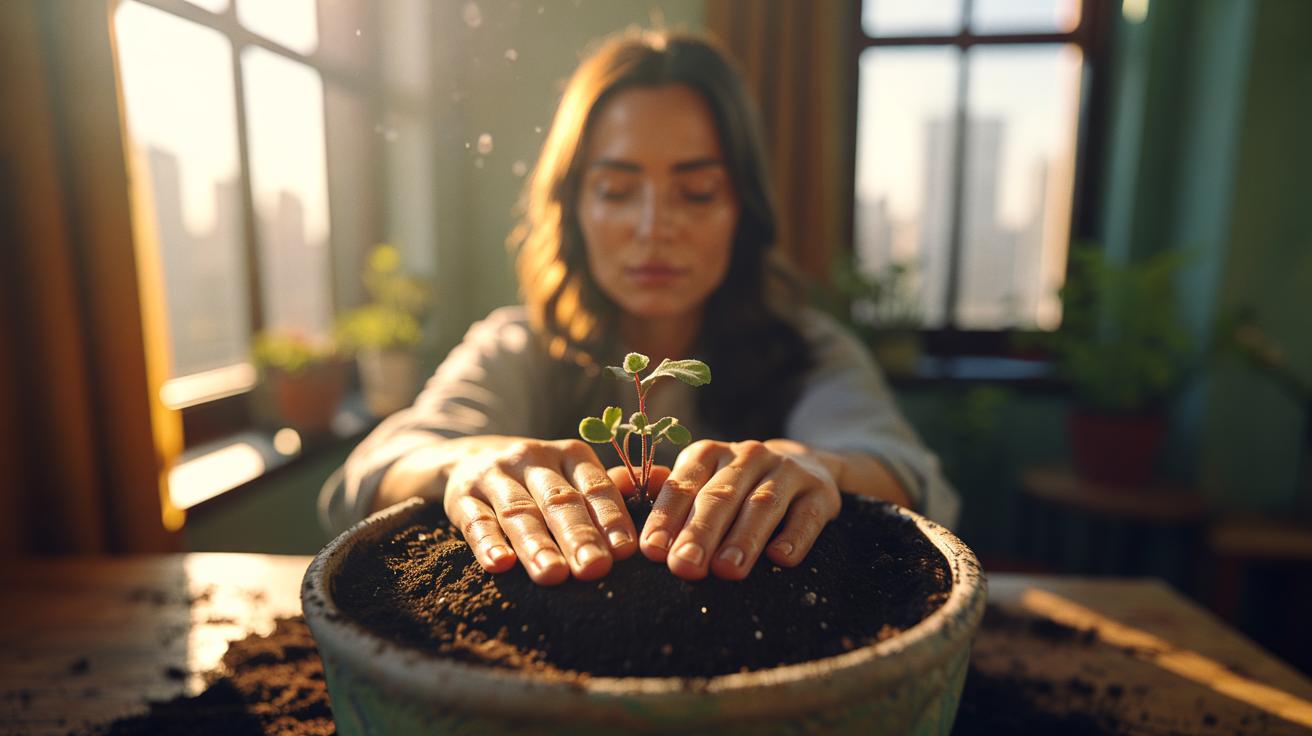
You don’t need an allotment to begin. Keep a shallow tray of peat-free compost by a sunny window and spend five minutes each morning sifting it through your fingers. Repot herbs, sow microgreens, or pinch basil to release its peppery scent. On a balcony, fill a crate with soil and plant mixed salad leaves; thin seedlings each day to create a ritual of touch. In a flat, use a terrarium or wormery—both are compact and rich with microbial life. Think rhythm over intensity: short, daily contact appears more stabilising for mood than occasional marathons. If you’re office-bound, adopt a desk planter and refresh the top layer of soil during breaks.
| Activity | Daily Time | Focus | Likely Benefit |
|---|---|---|---|
| Hand-sifting compost | 5–10 minutes | Tactile rhythm | Lower arousal; calmer breathing |
| Repotting houseplants | 10–15 minutes | Microbial exposure | Improved mood; reduced rumination |
| Seed sowing/microgreens | 5 minutes | Attention restoration | Sharper focus; lighter mood |
| Allotment weeding | 15–20 minutes | Rhythm + microbes | Stress relief; better sleep |
Pair soil time with simple breath cues—inhale as you gather, exhale as you crumble—so the practice imprints as a calm anchor. Use unperfumed, natural soils, avoid antiseptic wipes immediately afterwards, and let hands dry naturally before a gentle wash. Turn it into a family ritual: children often respond quickly to the sensory play, and shared routines boost adherence. For city dwellers, seek community gardens; brief volunteer sessions can supply both soil contact and social warmth, a reliable combination for mental health.
Safety, Allergies, and Urban Realities
Not all soil is equal. In older urban plots, there may be heavy metal residues or pollutants. Choose certified, peat-free compost for containers, or get local soil tested if you plan deep digging. If you have cuts, wear thin cotton gloves for protection, then remove them for brief, direct touch on intact skin. Keep tetanus vaccinations up to date. Those with severe allergies or immune suppression should seek personalised advice before high-exposure activities, but can still often manage controlled, low-risk contact at home. Clean, well-sourced soils deliver the benefits; caution and common sense keep them safe.
Hygiene needn’t erase the therapeutic effect. Let soil dry on the skin for a few minutes to maximise the tactile and microbial input; then wash with mild soap and lukewarm water. Compost should be moist, not dusty, to avoid aerosolised particles. Store bags in a cool, ventilated space, and dampen before handling on windy days. Consider mulches and living ground covers to reduce splashing and airborne dust. Remember: this is about frequent, small exposures integrated into daily life. The goal is a steady, sustainable practice that fits a busy, urban routine without adding friction or risk.
Touching soil is a humble act that restores proportion to a jittery day. It engages the hands, steadies the breath, and recruits a cast of friendly microbes to coax the nervous system into kinder rhythms. Inexpensive, accessible, and quietly pleasurable, daily soil contact offers a grounded counterweight to digital overwhelm. Start with a single pot, a scoop of compost, and five unhurried minutes. Then watch the habit take root—on your windowsill and in your mood. If you tried it this week, what small, soil-based ritual would you choose, and how might you shape it into a daily anchor for calm?
Did you like it?4.6/5 (22)