In a nutshell
- 🕔 A fast five-minute reset restores function and calm by tackling visual noise, not deep cleaning—focus on surfaces, containers, and lines, and stop when the timer ends.
- 🧭 Memorise the script: define the zone, clear surfaces into a tote, contain and sort later, straighten lines, do a 30-second micro-clean, then add a visual anchor for instant order.
- 🏠 Room-specific tweaks multiply impact: living room (soft clutter), kitchen (post and dishes), bedroom (clothes and cables), bathroom (bottles). Use one named container per space and a clear priority and anchor.
- 🧰 Make it stick with a grab-and-go reset kit, a two-song playlist, and habit stacking; fall back to a two-minute version when motivation dips.
- 👨👩👧👦 Share the load: assign roles by surface, turn it into a timer race for kids, track streaks—because consistency over perfection keeps rooms usable and weekends freer.
The Five-Minute Reset That Makes Any Room Feel Instantly Organised
When a space feels chaotic, you don’t need a marathon clean. You need a reset. The five-minute reset is a tiny, tactical routine that trades perfection for progress and delivers instant calm. It’s built around a clock, a defined zone, and a handful of non-negotiable moves that tame visual noise fast. In offices, flats, family kitchens, even student halls, the method is identical: reduce decisions, remove friction, restore lines. Five minutes is short enough to start without dread yet long enough to change how a room reads. Done properly, it turns overwhelm into momentum in the time it takes to boil a kettle.
What the Five-Minute Reset Actually Does
The reset is not deep cleaning. It’s an order-creating sprint designed to restore function and clarity. Think of it as a room’s “baseline”. You’re prioritising surfaces, containers, and lines—the bits your eye reads first. When you compress action into five minutes, you sidestep dithering. Decision fatigue plummets. You ride the timer, not your mood. It’s surprisingly liberating: fewer choices, faster wins, visible change.
The method works because clutter is a visual problem as much as a practical one. Clear the sightlines and a space feels calmer, even if the cupboard still needs a proper edit next weekend. You train your brain to associate short, repeatable actions with an immediate payoff, which builds a habit loop you’ll actually keep. Stop when the timer ends—the boundary is the secret sauce. That hard finish means you’ll return tomorrow rather than burning out today.
Set a micro-goal: restore one visual anchor—coffee table, kitchen island, bed, or desk—so the room broadcasts “under control” at a glance. Then lock in two house rules: everything in a temporary container during the reset, and no wandering off to another room. Never leave the room during the five minutes; containment always beats distraction.
A Five-Step Script You Can Memorise
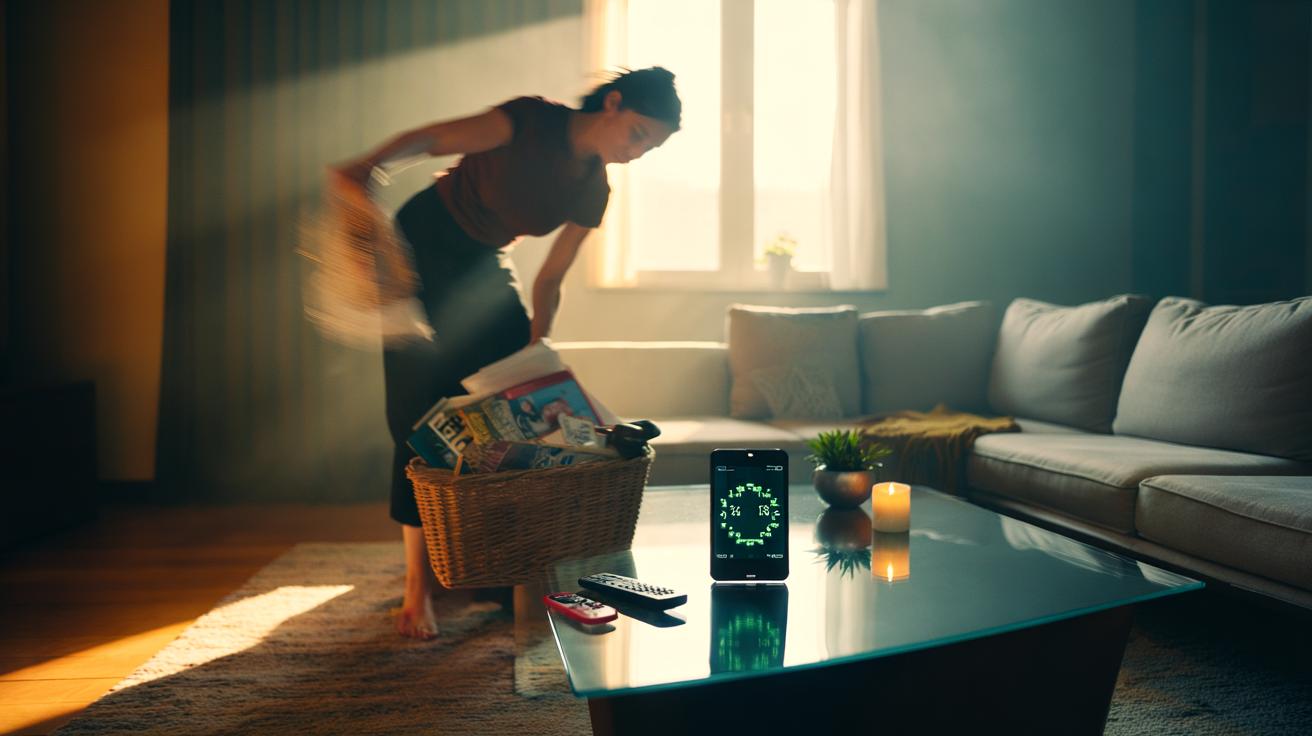
Start with a countdown. Tell your phone, “five minutes”, and hit start. Step one: define the zone. Pick the half of the room you face most—sofa-and-TV area, hob-and-sink, desk-and-chair. You’re not tidying your entire life; you’re restoring the stage. Step two: clear surfaces first. Sweep everything non-essential into a tote, basket, or box. Work left to right. Big items first, then small. Surfaces are prime real estate; when they’re clear, the room reads calm.
Step three: contain and sort later. Resist rehoming anything now. The tote is your triage bay. Step four: fix the lines. Straighten cushions, align stacks, fold a throw, square the rug, line up chairs. Humans read edges quickly; crisp edges signal order. Step five: one micro-clean—30 seconds max. A quick dust-and-shine on the most-seen surface or a fast vacuum stripe along traffic lanes. If you’ve time left, empty the tote in batches after the alarm, not during it.
Finish with a flourish: add or reveal a visual anchor—a candle, a plant, a clear fruit bowl, a centered book on the coffee table. This is theatre as much as housekeeping, and it works because the brain loves a focal point. Anything left visible must either belong or be beautiful. That simple rule nudges tomorrow’s clutter decisions in your favour.
Room-by-Room Tweaks in 300 Seconds
Every room has a signature mess. Tailor the same script to the dominant offender and you’ll multiply results. In the living room, it’s soft clutter—throws, toys, magazines. In the kitchen, it’s micro-debris—post, mugs, random gadgets. Bedrooms collect clothes and cables; bathrooms stockpile half-empty bottles. Use a single container per space, give it a name, and run the same five steps nightly. The consistency is comforting. The speed is addictive.
Use the table below as a quick prompt. Keep it simple, visible, and specific. The more you personalise the priority and visual anchor, the faster your brain gears up when the timer starts. Clarity beats willpower every single time.
| Room | 60-Second Focus | Container | Visual Anchor |
|---|---|---|---|
| Living room | Clear coffee table and straighten cushions | Woven basket for remotes, toys, magazines | Centred tray with candle/plant |
| Kitchen | Empty/stack dishes and wipe hob | Inbox for post and stray gadgets | Clear sink and shining hob |
| Bedroom | Clothes off chair; make bed tight | Laundry tote + small bedside dish | Smoothed duvet and aligned pillows |
| Bathroom | Clear ledges; hang towels | Small caddy for bottles | Folded towel and clear basin |
Guard the routine with two micro-rules: no sentimental sorting mid-reset, no “just quickly” texts or emails. If you live with others, assign roles by surface. One person resets the anchor, another runs the containment sweep. Kids? Make it a race against the timer with a named basket. When the roles are tiny, people actually do them.
Make It Stick: Tools, Music, and Micro-Habits
Keep a grab-and-go reset kit within reach: tote or basket, microfibre cloth, all-purpose spray, lint roller, and a handheld vacuum if you have one. That’s it. Friction kills habits; tools in arm’s reach revive them. Preload a two-song playlist—upbeat, predictable, exactly five minutes. Music is your metronome and your mood shifter. If it takes longer to fetch supplies than to tidy, you won’t start.
Anchor the reset to something you already do: kettle on, timer on; brush teeth, timer on; lock the door, timer on. Habit science calls this stacking, and it’s ruthless in the best way. Use visible cues too: a folded throw becomes the nightly signal to begin. If motivation wobbles, drop to a two-minute version: surfaces only, lines only, or basket only. Small still counts.
Create simple “house language” so everyone knows the drill. “Basket it”, “lines”, “anchor”—short commands, shared meaning. Record a score on the fridge or a notes app for streaks. Celebrate the boring bit: consistency. Progress over perfection wins at home, hands down. And when life gets messy—as it does—this five-minute cadence keeps rooms usable, spirits buoyant, and weekends freer for the deep stuff that actually needs it.
In the end, the five-minute reset is less about cleaning and more about control: setting a boundary, restoring sightlines, and proving to yourself that a quick win is always within reach. It’s democratic, cheap, and repeatable, whether you rent a studio or run a busy family home. Pick your anchor, grab the basket, press play, and watch the room exhale. You don’t need a new system; you need a tiny rhythm you’ll keep. Where will you try your first five-minute reset tonight, and what will be your visual anchor?
Did you like it?4.7/5 (23)